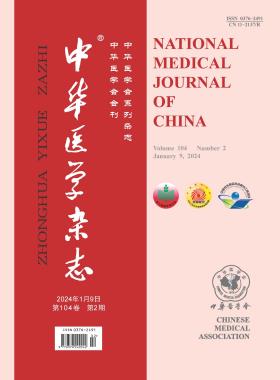
National Medical Journal of China
Volume 104 · Issue 02 · 2024
Natl Med J China
In order to realize the "Healthy China 2030" strategic plan, it is necessary to create a new model of all-round and full-cycle cancer health management in line with China′s national conditions and the characteristics of the times. Comprehensively strengthen the construction of the whole-chain tumor prevention and control system, shift the front of cancer prevention and treatment to the precancerous cycle, and realize the full-cycle management of accurate screening, regular follow-up, early diagnosis, early treatment and rehabilitation follow-up of cancer patients; all-round interdisciplinary cooperation, strengthen the management of patients with accompanying diseases, and encourage patients to return to society and families in the best condition; comprehensively deploy tumor big data and smart medical care, promote the construction of Internet outpatient clinics and regional medical centers, and develop a three-level linkage palliative care model, Solve a series of problems such as shortage of medical resources and poor homogeneity of medical care.
Nationwide epidemiological data on pregnancy and childbirth was lacking in China during the last decades. Since the establishment of the national data monitoring network and the booming of regional epidemiological studies, more information has emerged. The results and suggestions from the China Labor and Delivery Survey are crucial for improving current clinical practices. Researches that are conducted based on national data monitoring network and hospital-based medical history system, and multicenter clinical trials will provide plenty of useful evidences. These high-quality evidences would further improve clinical practice and development of obstetrics in China.
Bone health management of breast cancer runs through the whole cycle of patient treatment. During the process of adjuvant treatment for early breast cancer, clinicians should be pay attention to the prevention of bone loss caused by treatment. Adjuvant use of bone-modifying agents can help improve the prognosis of some patients, and patients with bone metastases should be given multidisciplinary comprehensive treatment and use bone-modifying agents to prevent the occurrence bone related adverse events. Therefore, no matter for the treatment of early or advanced breast cancer, it is necessary to manage bone health, formulate appropriate treatment strategies, and deal with adverse events of drugs. Good bone health management will help improve the quality of life and survival of patients. The breast cancer expert committee of the National Cancer Quality Control Center organized relevant experts to deeply explore the full cycle management of bone health in breast cancer based on Evidence-based medicine evidence. The risk classification and treatment strategy of cancer treatment-induced bone loss in early breast cancer, the applicable population and benefits of adjuvant treatment of bone modifying drugs, the diagnosis and treatment of bone metastasis in advanced breast cancer, and the treatment of adverse reactions of bone modifying drugs were elaborated in detail. We hope to guide clinicians to better deal with bone health problems in clinical practice by putting forward reasonable suggestions for patients with breast cancer.
The laryngeal nerve is the most commonly involved peripheral structure of locally advanced differentiated thyroid carcinoma, which often requires larger resection range and corresponding reconstruction, resulting in a series of complications and sequelae. Therefore, treatment strategies must not only guarantee survival benefits, but also take into account functional protection or reconstruction. Comprehensive and detailed evaluation should be conducted before surgery, and a thorough treatment plan should be made according to scientific stratification in different situations. This consensus aims at thyroid surgeons, voice physicians, anesthesiologists, rehabilitators, nurses and other groups, and standardizes the diagnosis, treatment and rehabilitation technical standards and procedures of advanced differentiated thyroid cancer involving laryngeal nerve, so as to benefit the majority of thyroid cancer patients.
To analyze the clinical characteristics of patients with common cardiovascular diseases (CVD, including hypertension, coronary heart disease, atrial fibrillation, and heart failure) combined with mild cognitive impairment (MCI) and explore the potential risk factors of MCI in patients with CVD.
A total of 2 294 patients with common cardiovascular diseases who met the criteria at Cardiology Medical Center in Beijing Anzhen Hospital, Capital Medical University, from June 1, 2021, to January 5, 2022, were retrospectively included. The patients were divided into the normal cognitive function group (1 107 cases) and the MCI group (1 187 cases). Demographic information and CVD status were collected. The information of cognitive function were collected using the Montreal Cognitive Assessment (MoCA) and the Mini-Mental State Examination (MMSE) scales. The difference between normal cognitive function and MCI were compared and analyzed. The logistic regression analysis was used to explored risk factors of MCI in CVD patients.
A total of 2 294 patients aged (60.6±10.4) years were included, among whom there were 29.99% (688 cases) females. Compared with patients in the normal cognitive function group, patients in the MCI group were older [ (57.9±11.4) vs (63.1±8.9) years old, P<0.001], with a higher proportion of women [26.47% (293 cases) vs 33.28% (395 cases), P<0.001]; there was a higher proportion of patients suffering from hypertension in the MCI group [59.62% (660 cases) vs 64.62% (767 cases), P=0.014], and more components of CVD [(1.68±0.62) vs (1.74±0.65) components, P=0.017]. The risk factors of MCI in patients with common CVD were increased age, increased depression score, combined with hypertension, and ≥3 common components of CVD, with OR (95%CI) of 1.043 (1.032-1.054), 1.021 (1.004-1.037), 1.151 (1.142-3.439), and 1.137 (1.023-1.797), respectively (all P values <0.05). Increasing education level was observed to be associated with reduced risk of MCI with OR (95%CI) of 0.319 (0.271-0.378) (P<0.05).
The incidence of MCI was high in CVD patients. The risk factors of MCI in CVD patients included hypertension and≥3 common components of CVD.
To explore the clinical risk factors and susceptibility genes of diabetes after kidney transplantation (PTDM) and construct a risk prediction model for PTDM.
The data of kidney transplant recipients who underwent follow-up in the Affiliated Lihuili Hospital, Ningbo University and Sir Run Run Shaw Hospital, Zhejiang University School of Medicine from January 2001 to December 2022 were retrospectively analyzed. The recipients were divided into PTDM group and Non-PTDM group according to whether they were complicated with PTDM. The differences in clinical indicators between the two groups were compared, the risk factors affecting the incidence of PTDM were determined, and susceptibility genes of PTDM were screened by genome-wide association study (GWAS). PTDM risk prediction models based only on clinical indicators (Model 1) and clinical indicators combined with susceptibility genes (Model 2) were established respectively, and the predictive performance of the two prediction models was compared. Finally, the Nomogram of the optimal model was drawn, and the discrimination, calibration and clinical applicability of the model were evaluated.
A total of 113 kidney transplant recipients (70 males and 43 females) were included, with an average age of (46.2±10.8) years. There were 51 cases in PTDM group and 62 cases in Non-PTDM group. The related factors screened by GWAS and logistic regression analysis included family history of diabetes (OR=88.912, 95%CI: 5.827-1 356.601, P=0.001), preoperative triglyceride (TG) (OR=1.888, 95 %CI: 1.150-3.098, P=0.012), uric acid (UA) (OR=1.011, 95%CI: 1.000-1.022, P=0.045) and rs802707 (OR=10.046, 95%CI: 1.462-69.042, P=0.019). The area under the curve (AUC) of the receiver operating characteristics analysis (ROC) predicted by Model 1 for PTDM was 0.891 (95%CI: 0.811-0.972), with the sensitivity of 0.889 and the specificity of 0.742. The AUC of ROC curve predicted by Model 2 for PTDM was 0.930 (95%CI: 0.864-0.995), with the sensitivity of 0.885 and the specificity of 0.900.
Family history of diabetes, preoperative TG and UA, and rs802707 are significantly associated with the occurrence of PTDM. In addition, the combination of susceptibility genes could improve the predictive ability of clinical indicators for the risk of PTDM.
Exploring the clinical value of multiparametric magnetic resonance (Mp-MRI)-cognitive fusion method of targeted transperineal prostate puncture combined with rapid pathological diagnosis. Patients with suspected prostate cancer admitted to our hospital from 2022.01 to 2023.05 were selected as the study subjects, and Mp-MRI was performed and the suspected lesions were scored by the Prostate Imaging Reporting and Data System (PI-RADS). The enrolled patients were randomly divided into the transperineal prostate targeted puncture plus rapid pathology group (experimental group) and the transperineal prostate systematic combined targeted puncture plus conventional pathology group (control group), and the positive puncture rate, pathological findings, and complications were analyzed to compare the differences between the two groups. A total of 100 patients were enrolled, 53 in the experimental group [age 55-89 years, (73.17±7.79) years; tPSA 7.01-100 μg/L, mean 21.34 (12.38, 44.42) μg/L]and 47 in the control group [age 60-87 years, (71.96±7.07) years; tPSA 6.11-98.82 μg/L, mean 18.77 (9.04, 38.09) μg/L], and there was no significant difference between the two groups in the diagnostic positivity rate of overall PCa and clinically significant PCa (P>0.05); there was no significant difference in the highest Gleason score of pathological tissues between the two groups (P>0.05); the number of cases of medically induced sarcoid hematuria in the experimental group were significantly reduced compared with the control group (P<0.05). In terms of biopsy pain score (VAS), patients in the experimental group experienced less pain than those in the control group (P<0.05). The Mp-MRI-cognitive fusion method of transperineal targeted prostate puncture combined with rapid frozen section pathological examination can provide rapid and accurate pathological results, reduce the chance of post-puncture complications, and alleviate the pain caused by puncture sampling, which has high clinical value.
Various factors, such as the tumor itself and its treatment measures, can increase the risk of venous thromboembolism (VTE), which is the leading cause of death in addition to tumor progression. This paper introduces the risk assessment methods and individualized prevention strategies that tumor patients need to be different from those of non-tumor patients in different situations such as outpatient chemotherapy, internal medicine hospitalization and perioperative surgery. Therapeutic drug selection and anticoagulation duration for tumor-associated VTE; Recent advances at home and abroad such as adjustment of prevention and treatment protocols of tumor-related VTE under special clinical difficulties.
The central role of platelets in the process of physiological hemostasis is well known, and it also plays an important role in infection-mediated inflammatory and immune responses. The Neutrophil Extracellular Trap (NET) is a network of DNA and histones extruded from activated neutrophils during the inflammatory response, a process that can be triggered by the participation of platelets. The purpose of this paper is to review the molecular mechanism of platelet regulation of NET formation in infectious diseases and how NET affects platelet function, so as to provide new theoretical basis for the pathogenesis and treatment of infectious diseases.
Mitochondria are intracellular organelles that produce most of the cellular adenosine triphosphate (ATP) through tricarboxylic acid cycling and oxidative phosphorylation. Acetyl-CoA (CoA) is an indispensable cofactor in the process of mitochondrial energy production. Pantothenate kinase (PANK) is one of the key enzymes for CoA synthesis. It regulates the production of acetyl CoA and then affects the process of ATP production in the tricarboxylic acid cycle, thus leading to energy synthesis disorder, and eventually mitochondrial dysfunction, which can lead to the occurrence and development of diseases. The purpose of this article is to review the relationship between PANK and mitochondrial dysfunction-related diseases and the mechanism of influencing the occurrence and development of the diseases, so as to provide a new reference for the diagnosis and treatment of related diseases.
CURRENT ISSUE