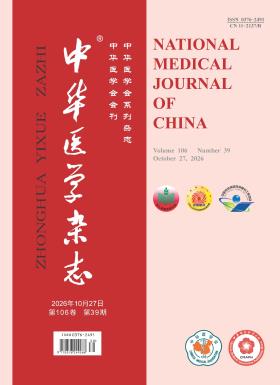
National Medical Journal of China

Chinese Medical Journal is the official journal of the Chinese Medical Association. As a comprehensive medical academic journal, it is circulated both in China and abroad. The journal features editorial comments, expert forums, special topic discussions, discussions on medical and health policies, Classics Remembered, Standards and Specifications, clinical studies, basic research, epidemiological studies, meta-analyses, systematic reviews, new technologies and methods, experience exchanges, difficult case evaluations, case reports, debates, continuing education columns, reviews, readers’ letters, domestic and international academic developments, literature snapshots and other sections. Reviews published in this journal are mostly commissioned, and unsolicited review manuscripts will not be accepted. The journal has launched an “Open Reading” initiative. All articles published since its founding are available for free reading and download on the official website (http://nmjc.net.cn), but may not be used for commercial purposes or uploaded to other platforms.
I. Submission Requirements and Notes
1. Manuscripts should be innovative, scientific and logical with authentic data. When reporting studies involving human subjects, the manuscript should specify whether the protocol complies with the ethical standards formulated by the committee responsible for human trials (institutional, regional or national), whether approval has been obtained from such committee, and whether informed consent has been acquired.
2. Submissions must be accompanied by the standard Submission Letter for Manuscripts in Chinese Medical Association Series Journals and Authorization Form for Manuscripts in Chinese Medical Association Series Journals. Electronic copies should be uploaded during submission. These documents can be downloaded via the journal’s online manuscript processing system at: https://medpress.yiigle.com/textbox/submission_letter.pdf and https://medpress.yiigle.com/textbox/copyright_authorization.pdf. The authorization form shall be signed by all authors in order of authorship. The submission letter shall include the institutional review opinion, a statement confirming no duplicate submission, no confidential information involved and no authorship disputes. Meanwhile, hard copies of the above submission letter and authorization form shall be mailed to the Editorial Office of Chinese Medical Journal, Chinese Medical Association Press,
No.69 Dongheyan Street, Xicheng District, Beijing, China;
Tel: 010-51322101;
Postal Code: 100052.
3. Manuscript submission: All manuscripts must be submitted online as required by Chinese Medical Association Press. Please log on to the official website (http://nmjc.net.cn) and click “Online Submission” to submit. Authors may check the manuscript status online anytime.
4. The title page shall include: article title, name, academic degree and affiliation of each author, as well as the corresponding author’s name, mailing address, telephone number and email address.
5. If the study reported in the manuscript is funded by national, ministerial, provincial or higher-level grants, bilingual notes (Chinese and English) shall be placed below the Chinese and English abstracts (a copy of the grant certificate shall be enclosed together with the mailed authorization form). Example: Fund program: National Natural Science Foundation of China (59637050).
6. A “Fast Track” service is available for innovative research findings of internationally advanced level. Manuscripts submitted for Fast Track publication must include a statement clarifying the innovation of the work, two expert review certificates from different institutions, and a novelty search report. Manuscripts meeting the criteria will undergo rapid peer review and be published promptly once accepted.
7. If authors receive no notification on manuscript handling within 3 months after submission, the manuscript remains under review. If authors intend to submit the manuscript to another journal, they must contact this journal in advance. Duplicate submission is prohibited. Once duplicate submission is identified, the manuscript will be rejected immediately. If duplicate publication is confirmed, the paper will be retracted, a retraction notice will be published, and submissions from the corresponding author will be rejected for two years. Authors of rejected manuscripts may appeal against the rejection decision.
8. Authors are fully responsible for the content of their manuscripts. In accordance with the Copyright Law of the People’s Republic of China, the journal reserves the right to edit and abridge accepted manuscripts. Any revisions altering the original meaning will be referred back to the authors for consideration. Revised manuscripts not returned within 15 days will be regarded as automatic withdrawal.
9. After acceptance, page charges shall be paid online as notified, and electronic invoices can be issued upon online payment. Upon publication, a modest honorarium will be provided and one complimentary issue of the journal will be sent.
10. A manuscript processing fee of 100 RMB per article is required. The fee shall be paid online through the submission system and is non-refundable regardless of final acceptance status.
II. Manuscript Preparation Guidelines
1. Title: Concise, explicit and reflective of the core theme. Foreign abbreviations should be avoided except universally recognized ones. A Chinese title is preferably within 25 Chinese characters. Arabic numerals are preferred for numbers in the title, but a title should not start with a numeral.
2. Authorship: All authors must agree on the author list and order at the time of submission. Author names are placed below the title, marked with superscript numerals corresponding to the numbered affiliations listed below. Changes to authorship and order are not permitted during production. In principle, one author can be affiliated with only one institution (If the administrative institution the author belongs to differs from the institution where the research was conceived, designed, conducted and supported, or if authors come from multiple institutions, the affiliation shall be the institution that provided research support and hosted the study). If multiple affiliations must be listed, all institutional seals must be affixed on the same submission letter, and the first author’s affiliation must be the source institution of the research. For collectively authored papers, a corresponding author must be clearly identified with contact information listed under the title; information of compilers and collaborative group members shall be placed before references at the end of the manuscript. For foreign authors, written consent is required, and their mailing addresses shall be provided both in their native language and Chinese, with place names following the English names on officially published maps.
3. Abstract: All original articles must be accompanied by structured Chinese and English abstracts of around 400 words, covering four sections: Objective, Methods, Results (with key data), and Conclusions, each with a subheading. Abstracts should be written in the third person without pronouns such as “this paper”. Editorial comments, expert forums, special topic discussions, medical and health policy discussions, epidemiological studies, meta-analyses, systematic reviews, experience exchanges and new technologies and methods also require short descriptive Chinese and English abstracts. All other manuscript types (reviews, continuing medical education articles, case reports, etc.) shall provide brief indicative Chinese abstracts (unstructured, 100–200 words). When a corresponding author is designated, a new line after affiliations starts with “Corresponding author”, followed by the author’s name and Email. Example: Corresponding author: Leng Xisheng, Email: lengxisheng@aliyun.com.
4. Keywords: Original articles require 3–8 keywords. Terms from the latest edition of Index Medicus Medical Subject Headings (MeSH) compiled by the U.S. National Library of Medicine are preferred. Common free terms may be added at the end when necessary.
5. Study design: The name and key features of the study design shall be clearly described. For surveys, specify whether it is prospective, retrospective or cross-sectional. For experimental studies, specify the exact design type. For clinical trials, specify the trial phase, blinding method, inclusion and exclusion criteria for participants, etc.
6. Statistical methods: Specify the exact statistical procedures adopted (e.g., two-sample t-test, two-factor factorial analysis of variance). Report exact test statistics (e.g., t=3.452, χ2=4.683, F=6.791) and P values to three decimal places. When P<0.000, write P<0.001 instead of P=0.000 for three decimal precision. For pairwise comparisons among multiple groups, specify the comparison method; individual test values may be omitted. When estimating population parameters (population mean, proportion, RR, OR, HR, etc.), report 95% confidence intervals alongside significance test results. A P value shall not replace a confidence interval. Quantitative data with skewed distribution shall be expressed as M (Q1, Q3) instead of x̄±s. Appropriate statistical methods shall be selected according to design type, data characteristics and research objectives. Avoid indiscriminate use of t-test, one-way ANOVA or χ2 test. Do not fit linear regression to data showing obvious curvilinear trends. Correlation analysis is not suitable for assessing agreement between two measurement methods. For multivariate and multi-indicator datasets, multivariate statistical approaches should be applied on the basis of univariate analyses to comprehensively interpret interactions and internal relationships among indicators. When reporting relative numbers, the denominator should preferably be ≥20. Distinguish percentage points from percentages. Statistical symbols shall be italicized and comply with GB/T 3358.1—2009 Statistics — Vocabulary and symbols.
7. Medical terms: Use terms approved by the China National Committee for Terminology in Science and Technology after 1989, terms in Medical Terms published by Science Press and relevant discipline standards. Terms not yet approved may adopt subject headings from the latest MeSH, MeSH Annotated Alphabetic List or Chinese Medicine Subject Headings. Drug names shall follow the latest edition of Pharmacopoeia of the People’s Republic of China and Chinese Approved Drug Names compiled by the Chinese Pharmacopoeia Commission. International Nonproprietary Names (INN) are required; trade names are not allowed.
8. Figures and tables: Each figure and table must have a concise caption. Table row and column headers should be logically arranged for clarity. Within one table, the same indicator should retain consistent decimal places, usually one more digit than the measurement precision. Figures should not be oversized: single-column figures ≤7.5 cm wide, full-column figures ≤17.0 cm wide, with a height-width ratio around 5:7. Figure types should match data characteristics, and axis scales must follow mathematical conventions. Images must have high resolution and contrast. Symbols and arrows within figures should be clearly marked. Published human photographs require written consent from the individual or anonymization of identifiable features. Gross specimen images must include a scale bar. Pathological micrographs should state staining method and magnification.
9. Measurement units: Adopt the statutory measurement units of China issued by the State Council in February 1984, expressed with standard symbols. Refer to Application of Statutory Measurement Units in Medicine (3rd edition, Beijing: People’s Military Medical Press, 2001) published by Chinese Medical Association Press. Quantity names follow GB 3100/3101/3102.8-1993 Quantities and units in physical chemistry and molecular physics (e.g., molecular weight should be referred to as relative molecular mass).
10. Numerals: Follow GB/T 15835—2011 Rules for Writing Numerals in Publications.
11. Abbreviations: Abbreviations should generally not appear in titles. When an abbreviation is first mentioned in the abstract or main text, its full Chinese name must be provided. Minimize abbreviations; avoid abbreviations for terms with no more than four Chinese characters to maintain readability.
12. Acknowledgements: Placed after the main text and before references. Thank individuals or organizations that contributed partially, provided technical assistance, convenience or guidance but do not qualify for authorship, as well as funding bodies. Acknowledgements must be concise, appropriately worded and approved by the acknowledged persons.
13. Author contribution statement: Original research articles must include an author contribution statement before references, specifying each author’s concrete roles in study conception, execution and reporting, such as study conception and design, investigation, data collection, data analysis/interpretation, manuscript drafting, critical revision of intellectual content, statistical analysis, funding acquisition, administrative, technical or material support, supervision and other supporting contributions.
14. References: Follow GB/T 7714—2015 Information and documentation — Rules for bibliographic references and citations to information resources with sequential numbering, marked by Arabic numerals in the order of first citation in text. The DOI must be included for articles with a DOI at the end of each entry. For electronic documents, document type and carrier identifiers shall be marked according to GB/T 7714—2015. List up to the first three authors, followed by “et al.” for additional authors. Foreign journal titles are abbreviated per Index Medicus; Chinese journal titles are written in full. Each reference must include the start and end page numbers. Authors are responsible for verifying all references against original sources. For articles published online ahead of print, the format is: Primary author(s). Title[Document type/Carrier identifier]. Journal Name, Year, Volume (update date)[cited date]. Access path. DOI (DOI may be omitted if already included in the access path). [published online ahead of print].
Examples:
[1] Cappa C, Gregson K, Wardlaw T, et al. Birth registration: a child′s passport to protection[J]. Lancet Glob Health, 2014, 2(2): e67-e68. DOI: 10.1016/S2214-109X(13)70180-3.
[2] Li JZ. Hematuria//Wang HY. Nephrology[M]. 2nd ed. Beijing: People’s Medical Publishing House, 1996:282-287.
[3] Ockner RK. Acute viral hepatitis//Wyngaarden JB, Smith Jr LH, Bennett JC, eds. Cecil Textbook of Medicine[M]. 19th ed. Philadelphia: Saunders, 1992:763-770.
[4] Dahl J, Gulseth HL, Forsén L, et al. Risk of hip and forearm fracture in subjects with type 2 diabetes mellitus and latent autoimmune diabetes of adults. The HUNT Study, Norway[J/OL]. Bone, 2021, 153(2021-07-09) [2021-09-08]. https://www.sciencedirect.com/science/article/pii/S8756328221002751?via%3Dihub. DOI: 10.1016/j.bone.2021.116110. [published online ahead of print].
CURRENT ISSUE