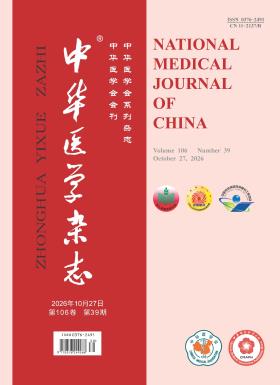
National Medical Journal of China

To ensure the quality of the journal, all submitted manuscripts are subject to peer review. The review requirements, criteria for acceptance and rejection, and precautions are as follows.
I. Political Requirements
The content of manuscripts should adhere to the Four Cardinal Principles, uphold dialectical materialism, implement the Party and state policies and guidelines regarding science, technology, health, and publication, comply with national laws and regulations, and be free from political errors, exaggeration, or disclosure of state secrets.
II. Academic Requirements
The journals of the Chinese Medical Association should not only reflect new achievements in relevant disciplines in China and represent the national level of medical development, but also align with the current medical practice and actual needs in China. They should implement the principle of combining theory with practice, popularization with enhancement, and the policy of "letting a hundred flowers bloom and a hundred schools of thought contend." Manuscripts are required to possess "scientific validity, innovation, practicality, and readability." The content must be factual, objective, accurate, have certain academic value, and provide guidance to readers. Attention should be paid to whether the research design of the reported study is rigorous, whether the design of clinical research meets the requirements of evidence‑based medicine and modern clinical epidemiology, whether the methods are accurate and reliable, whether the diagnostic basis is sufficient, whether the sample size is adequate, whether the data are complete, whether the clinical manifestations and therapeutic effects are objectively and thoroughly observed, whether the data are accurate, complete, and comply with statistical requirements, whether the conclusions are sufficiently based and appropriately drawn, and whether the authors present new or more in‑depth practical experience, scientific findings, or insights compared with similar published studies domestically and internationally. For significant innovations and domestic first‑reported research findings, the "fast track" publication process should be recommended for publication within the shortest possible time (within 4 months of receipt). Attention should be paid to detecting plagiarism or copying. Commentary articles should be clear, concise, and cite necessary references. Narrative reviews and lectures should address current issues of general significance, reflect new levels of medical development, and include the author's own viewpoints or evaluations.
III. Writing Requirements
1. Text: Check whether the title is precise, concise, and consistent with the text. Whether the abstract is brief, whether the introduction directly states the background and purpose of the study. Whether the structure of the main text is appropriate, the levels clear, the key points highlighted, the arguments clear and rigorous, the narrative fluent and concise, the discussion logical and integrated with the data, and whether terms, nomenclature, symbols, units of measurement, and abbreviations comply with standards. Identify what content needs to be condensed.
2. Figures, tables, and data: Avoid duplication between figures/tables and the text. Check whether the design is reasonable, whether the images (including photographs and line drawings) are clear and correct, whether the data are accurate and have undergone necessary statistical processing, and whether the statistical methods are appropriately applied.
3. References: Encourage citing necessary references and include domestic references. The cited arguments, data, and methods should be appropriate and consistent with the original texts. The number of references can be reduced as needed, with no general limit. The reference format must comply with the journal's instructions.
4. English abstract: Ensure that the data in the English abstract are consistent with the corresponding Chinese abstract. To enhance international exchange, the English abstract may be more detailed than the Chinese one, but must not include content not covered in the main text. Check the correctness of English terms and grammar. The length should generally not exceed 400 English words.
IV. Criteria and Handling Principles for Acceptance and Rejection
Manuscripts are evaluated against the above political, academic, and writing requirements, and the following handling decisions are made.
1. Full publication or publication after condensation: Manuscripts that represent domestic or international first reports, new and mature domestic achievements, or new or more in‑depth practical experience and insights may be published in full. Those with redundant or repetitive content may be published after condensation. Negative results from basic or clinical research should have equal opportunity for publication.
2. Publication as short original articles: Preliminary research reports, reports of similar studies that have been published but are still worth confirming, large‑series analyses that, although similar to past reports, still have value for deepening understanding, and general research or analytical reports may be published as short original articles.
3. Rejection: Manuscripts with irremediable political or academic errors, content that does not fall within the journal's scope or aim, content that has been repeatedly covered in the journal, uncertain diagnoses, immature treatment methods, untenable arguments, or content that is general and of little value may be rejected. Manuscripts confirmed to be duplicate submissions will be rejected, and the editorial office will take appropriate actions according to relevant regulations. When rejecting, the main reasons and constructive suggestions should be provided as much as possible to help the authors improve, using a consultative and friendly tone. When the volume of submissions is high, particular attention should be paid to timeliness, and decisions should be made promptly in accordance with the principle of "adjusting input to output" and under the overall design of the journal.
4. Recommendation for submission to other journals: Manuscripts of certain value but not suitable for this journal may be recommended for transfer to other journals. Sometimes a manuscript is usable, but due to space limitations and the principle of "adjusting input to output," authors may be asked to submit elsewhere.
5. Archived manuscripts: Manuscripts not intended for publication due to confidentiality or other reasons may, if necessary, be retained as editorial reference material with the authors' consent.
V. Precautions for Reviewers
1. Reviewers should approach their work with a high sense of responsibility towards the journal, readers, and authors, performing reviews seriously, carefully, and meticulously. Treat all authors equally and make decisions based on the quality of the manuscript. Avoid and declare any conflicts of interest related to the review. Reviewers should recuse themselves from reviewing or handling manuscripts submitted by persons with whom they have a close relationship.
2. Reviewers should clearly express their opinions on the reviewed manuscript and write thorough review comments. The review comments should cover political, academic, and writing aspects, and should be as comprehensive as possible at one time to avoid multiple revisions or rejection after revision, which may cause difficulties. Sign the review to indicate responsibility and note the date of completion.
3. The names of reviewers for each manuscript are kept confidential from the authors. Reviewers should not show the reviewed manuscript to others or discuss it with unrelated individuals. If it is necessary to seek opinions from others in special circumstances, this should be noted on the review form, and those individuals should also be required to maintain confidentiality. Do not disclose the reviewer's identity or review comments to the author or any third party other than the editors. The editorial office is responsible for synthesizing all opinions and communicating directly with the authors.
4. Reviewed manuscripts should be returned to the editorial office within 2 weeks to facilitate prompt processing. Reviewers participating in the "fast track" process should cooperate with the editorial office and return their review comments via the internet or express mail within the specified time. If the assigned manuscript does not match the reviewer's expertise or is difficult to review, it should be returned promptly, preferably with a recommendation for a suitable reviewer. If work or illness prevents timely completion, please return the manuscript and inform the editorial office of the expected period during which reviews cannot be undertaken. If a reviewer will be away for an extended period and cannot review, please notify the editorial office in advance and return all assigned manuscripts. Reviewers are advised to maintain their own records of receipts and returns for future reference. The editorial office implements a reminder system for overdue reviews. Pathological slides, X‑ray films, electrocardiograms, other photographs, figures, and materials attached to the manuscript should not be lost or damaged.
5. For manuscripts not yet finally accepted, do not use pen, ballpoint pen, or brush to make corrections on the original manuscript; pencil annotations or suggestions may be used to help authors and editors understand the review comments. However, use a consultative and friendly tone. Do not force changes to the authors' basic academic viewpoints.
6. Pay attention to overall balance; without compromising quality standards, give appropriate consideration to manuscripts from remote areas and primary‑level institutions.
VI. Reviewer Qualifications
Reviewers should be enthusiastic about journal editing and review work, have a rigorous academic attitude, be conscientious and responsible, and be impartial. They should understand the Party and state policies on science, technology, and publication, as well as national standards for documentation. They should have a high level of theoretical and academic knowledge, be familiar with research design and statistical methods, have experience in peer review, be perceptive, able to identify problems and express opinions, and have published a number of papers themselves. They should have a good command of a foreign language. They should hold at least a senior associate professional technical title (e.g., associate professor or equivalent). They should preferably have the ability to conduct online reviews.
CURRENT ISSUE