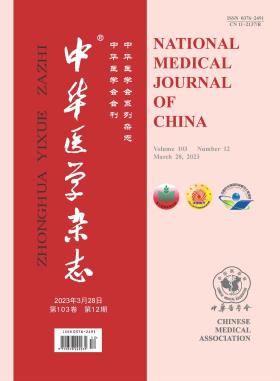
National Medical Journal of China
Volume 103 · Issue 12 · 2023
Natl Med J China
Corona virus disease 2019 (COVID-19) can lead to thrombotic complications through multiple mechanisms. Venous thromboembolism (VTE) is one of the most important causes of death or poor prognosis in hospitalized patients with COVID-19. The prognosis of thrombosis in COVID-19 patients can be improved with VTE and bleeding risk assessment, as well as appropriate VTE prophylaxis. However, in current clinical practice, there still is much room for progress in choose of appropriate prevention methods, anticoagulant regimens, doses, and courses based on the severity and specific condition of COVID-19 patients and dynamically balancing the risk of thrombosis and bleeding. In the past three years, a series of authoritative guidelines related to VTE and COVID-19 and high-quality, evidence-based medical research evidence have been released both in domestic and internationally. Based on this, in order to better guide the clinical practice in China, multi-discipline expert discussions and Delphi expert demonstrations formulated the"Thromboprophylaxis and management of anticoagulation in hospitalized patients with COVID-19: an update of the CTS guidelines", aiming to address the issues of thrombosis risk and prevention strategies caused by COVID-19, anticoagulant management of hospitalized patients, diagnosis and treatment of thrombosis, anticoagulant management of special populations, interaction and adjustment strategies of antiviral and anti-inflammatory drugs and anticoagulant drugs, follow-up after discharge and many other aspects of clinical situations. Recommendations and clinical guidelines are provided for appropriate thromboprophylaxis and anticoagulation management strategies for VTE in patients with COVID-19.
Transcatheter aortic valve replacement (TAVR), as an important procedure for aortic valve diseases worldwide, features with a late start and rapid development in China. In the process of clinical application, the lack of standard guidelines and training system has brought challenges to the widespread use of this technique. In order to standardize the application of TAVR technique and improve the quality of medical care, the National Center for Cardiovascular Diseases and the National Center for Quality Control of Structural Heart Disease Intervention, together with the Chinese Society of Cardiology and the Chinese Society for Thoracic and Cardiovascular Surgery, jointly established an expert group on the guidelines for TAVR, combined with the recommendations of international guidelines and the current clinical practice in China, integrated the latest evidence in China and worldwide to develop the clinical guideline of TAVR with extensive consultation (Chinese Expert Consensus). The guideline mainly included 11 parts: methods, epidemiological feature, TAVR devices, requirements of cardiac teams, recommendations for TAVR indications, perioperative multimodality imaging evaluation, surgical procedures, anti-thrombotic strategies after TAVR, prevention and treatment of complications, postoperative rehabilitation and follow-up, limitations and prospects, aiming to provide reasonable recommendations for all-level clinicians in China.
To investigate the expression level and clinical significance of cSMARCA5 in the patients with acute myocardial infarction (AMI).
This study was a case-control study. A total of 100 patients with AMI and 100 patients without coronary heart disease who received treatment in the Department of Cardiology, Peking University Third Hospital from September to December 2021 were included in the study according to the principle of 1∶1 frequency matching. The expression levels of cSMARCA5 in the peripheral blood of AMI patients and control groups were measured by real-time quantitative polymerase chain reaction (RT-qPCR). The receiver operating characteristic (ROC) curve was used to calculate the diagnostic ability of cSMARCA5 for AMI. Spearman or Pearson correlation analysis was used to explore the correlation between cSMARCA5 and the degree of myocardial necrosis, coronary lesion severity and GRACE risk stratification score. Bioinformatics analysis was used to predict the possible mechanism of cSMARCA5 in pathological changes of AMI.
The age [M (Q1,Q3)] of AMI patients and control group was 63.0 (56.0, 71.5) and 63.0 (53.0, 75.5) (P=0.622), and the proportion of males was 75.0% (75 cases) and 46.0% (46 cases) (P<0.001), respectively. The expression level [M (Q1,Q3)] of cSMARCA5 was significantly lower in AMI patients compared with the control group [0.37 (0.22, 0.73) vs 1.03(0.71, 1.75), P<0.001]. ROC analysis showed that the area under the curve of cSMARCA5 in diagnosing AMI was 0.83 (95%CI: 0.77-0.89, P<0.001), with a sensitivity of 89.0% and specificity of 67.7%. cSMARCA5 was negatively correlated with creatine kinase isoenzyme MB (r=-0.203, P=0.041), troponin T (r=-0.230, P=0.023) and N-terminal brain natriuretic peptide precursor (r=-0.250, P=0.012), and positively correlated with left ventricular ejection fraction (r=0.201, P=0.042). In addition, the expression level of cSMARCA5 was negatively correlated with SYNTAX score (r=-0.196, P=0.048) and GRACE risk score (r=-0.321, P=0.001). Bioinformatic analysis suggested that cSMARCA5 might be involved in the process of AMI through regulating the gene expression of tumor necrosis factor.
The expression of cSMARCA5 is significantly decreased in peripheral blood of AMI patients compared with control group, and its expression level is negatively correlated with the severity of myocardial infarction. cSMARCA5 is expected to be a potential biomarker of AMI.
To explore the application value of cervical exfoliated cell DNA methylation (CDO1m and CELF4m) combined with or without transvaginal sonography (TVS) for screening endometrial cancer in postmenopausal women.
A total of 143 postmenopausal women who underwent hysteroscopy for suspected endometrial lesions in the Department of Obstetrics and Gynecology of Peking Union Medical College Hospital from May 2020 to October 2021 were enrolled in this study. The cervical exfoliated cells were collected for gene methylation before hysteroscopy. Clinical information, tumor biomarkers, and endometrial thickness of TVS were also collected. With endometrial histopathology as the gold standard, multivariate unconditional logistic regression was applied to analyze the risk factors of endometrial cancer. The role of gene methylation with or without TVS were specifically explored.
The 143 patients were divided into an endometrial cancer group (n=56) and a control group (n=87), aged (59.27±6.45) and (61.07±8.26) years, respectively (P=0.051). Multivariate logistic regression analysis showed that, CA125≥35 U/ml, postmenopausal bleeding, endometrial thickness≥5 mm, CDO1m ΔCt≤8.4, and CELF4m ΔCt≤8.8 were the risk factors for endometrial cancer, with OR (95%CI) of 33.23 (2.51-1 335.28), 8.41(1.81-39.05), 14.45 (2.35-88.84), 17.34 (3.34-89.98), and 44.01 (6.79-285.25), respectively (all P values<0.05). The sensitivity and specificity of dual-gene methylation (CDO1 or CELF4) in the screening of endometrial carcinoma were both higher than others factors, reaching 87.5% (95%CI: 75.9%-94.8%) and 90.8% (95%CI: 82.7%-95.9%), respectively. TVS combined with DNA methylation detection further improved the sensitivity to 100.0% (95%CI: 93.6%-100.0%), but could not improve the specificity (59.8%, 95%CI: 48.8%-70.1%).
In postmenopausal women with suspected endometrial lesions, the accuracy of cervical cytology DNA methylation is better than other noninvasive clinical indicators for the screening of endometrial cancer. DNA methylation combined with TVS can further improve the sensitivity of screening.
To investigate the etiology, prevention and treatment status, and their corresponding regional differences of the patients with liver cirrhosis in China, in order to provide scientific basis for the development of diagnosis and control strategies in China.
Clinical data of patients diagnosed with liver cirrhosis for the first time through January 1, 2018 to December 31, 2020 from 50 hospitals in seven different regions of China were collected and analyzed retrospectively, and the difference of etiology, treatment, and their differences in various regions were analyzed.
A total of 11 861 cases with liver cirrhosis were included in the study. Thereinto, 5 093 cases (42.94%) were diagnosed as compensated cirrhosis, and 6 768 cases (57.06%) had decompensated cirrhosis. Notably, 8 439 cases (71.15%) were determined as chronic hepatitis B-caused cirrhosis, 1 337 cases (11.27%) were alcoholic liver disease, 963 cases (8.12%) were chronic hepatitis C, 698 cases (5.88%) were autoimmune liver disease, 367 cases (3.09%) were schistosomiasis, 177 cases (1.49%) were nonalcoholic fatty liver, and 743 cases (6.26%) of other types of liver disease. There were significant differences in the incidence of chronic hepatitis B, chronic hepatitis C, alcoholic liver disease, fatty liver, schistosomiasis liver disease, and autoimmune liver disease among the seven regions (P<0.001). Only 1 139 cases (9.60%) underwent endoscopic therapy, thereinto, 718 cases (6.05%) underwent surgical therapy, and 456 cases (3.84%) underwent interventional therapy treatment. In patients with compensated liver cirrhosis, 60 cases (0.51%) underwent non-selective β receptor blockers(NSBB), including 59 cases (0.50%) underwent propranolol and 1 case (0.01%) underwent carvedilol treatment. In patients with decompensated liver cirrhosis, 310 cases (2.61%) underwent NSBB treatment, including 303 cases (2.55%) underwent propranolol treatment and 7 cases (0.06%) underwent carvedilol treatment. Interestingly, there were significant differences in receiving endoscopic therapy, interventional therapy, NSBB therapy, splenectomy and other surgical treatments among the seven regions (P<0.001).
Currently, chronic hepatitis B is the main cause (71.15%) of liver cirrhosis in several regions of China, and alcoholic liver disease has become the second cause (11.27%) of liver cirrhosis in China. The three-level prevention and control of cirrhosis in China should be further strengthened.
Twenty-four male patients who underwent left ventricular assist device (LVAD) implantation due to advanced heart failure in Union Hospital, Fujian Medical University from June 2019 to June 2022 were retrospectively included. The age of patients was 32-61 (48.4±8.4) years. Everheat-Ⅰ, HeartCon and Corheart 6 left ventricular assist systems were used in 10, 6 and 8 cases, respectively. All patients were discharged successfully without mechanical failure, thrombosis or secondary thoracotomy for hemostasis. Early postoperative hemodynamics were significantly improved, left ventricular systolic diameter was reduced, left ventricular ejection fraction was gradually improved, and no hemolysis occurred. The patients were followed up for 3 to 39 (17.9±8.6) months, the cardiac function was restored to grade Ⅰ to Ⅱ, and the 6-minute walking test distance increased significantly. Therefore, satisfactory early results can be achieved with left ventricular assist device implantation for the treatment of heart failure.
To evaluate the efficacy of ketochromate tromethamine and phloroglucinol combination therapy in early expulsion of ureteral calculi after extracorporeal shockwave lithotripsy (ESWL) in patients with distal ureteral clculi. The clinical and follow-up data of 275 patients with lower ureteral calculi who underwent ESWL were collected retrospectively in Civil Aviation General Hospital from January 1st 2021 to June 30th 2021. According to whether adjunctive medication used before ESWL patients were divided into control group and medication group (with ketochromate tromethamine 30 mg and phloroglucinol 80 mg before ESWL). Primary endpoint is the clearance rate of ureteral calculi after ESWL, secondary endpoint are the other outcomes and drug allergy. There were 138 cases in control group [117 were males and mean age (42±13) years]. Meanwhile, there were 137 cases in medication group [118 were males and mean age (42±12) years]. The clearance rate of ureteral calculi at 24 h (67.88% vs 48.55%, P=0.001)、one week (76.64% vs 57.97%, P=0.001) and four weeks (89.05% vs 76.08%, P=0.005)after ESWL in medication group were significant higher than that in control group. There was a significant difference in the VAS score of pain scale after ESWL (1.77±0.80 vs 2.06±1.04, P=0.012) and re-ESWL rate (8.03% vs 17.39%,P=0.02) between two groups, but no difference with gross hematuria in 6 h after ESWL and drug allergy. Conclusions combination use of ketochromate tromethamine and phloroglucinol significantly improve early expulsion of ureteral calculi after ESWL in patients with distal ureteral calculi, with no side effect.
This article reports a case of dermatomyositis in a 51-year-old woman (after breast cancer surgery). After 2 years of treatment, the rash recurred at the original site, but the rash appeared as nodular maculopapular rash, which was different from the previous nature. At the same time, multiple enlarged lymph nodes in the hilum and mediastinum were found, which could not be explained by the recurrence of breast cancer. Finally, skin biopsy confirmed that it was sarcoidosis, and sarcoidosis was considered instead of dermatomyositis or breast cancer recurrence. This article mainly discusses the idea of differential diagnosis of patients with dermatomyositis when their condition fluctuates ("monism" or "dualism, pluralism"), and analyzes the relationship between dermatomyositis and sarcoidosis and the treatment choice when combined.
This paper reports a case of hepatolenticular degeneration (WD) with atypical liver pathology, mainly severe lobular hepatitis with necrotic collapse. This case suggests that clinical and pathologists, encountering young "cirrhotic" patients, recommend routine copper staining of liver pathology to diagnose or rule out WD. Single-site heterozygous mutations in the ATP7B gene are not sufficient to cause disease, but compound heterozygous mutations from both parents may cause disease.
Pretibial myxedema is a characteristic cutaneous manifestation of Graves' disease and often follows thyroid dysfunction. The first symptom of this patient was edematous erythema of both lower limbs, which was initially misdiagnosed as erysipelas, and was diagnosed as pretibial myxedema by pathological examination. Later, abnormal thyroid function and thyroid color ultrasound were found, and the final diagnosis was Graves disease. Give a low-iodine diet, methimazole 15 mg, orally once a day. The skin lesions were encapsulated with compound clobetasol propionate ointment, and the original redness and swelling subsided after 3 weeks. It is suggested that clinicians should pay attention to the skin manifestations of systemic diseases and avoid misdiagnosis and misdiagnosis.
Omicron, a variant of the novel coronavirus (SARS-CoV-2), has seen a significant increase in reinfection rates during the pandemic phase. This article outlines the definition of SARS-CoV-2 reinfection, epidemiological characteristics such as proportion, severity, previous infection, and the relationship between vaccination and reinfection. It was found that the time interval between reinfection and first infection was generally>90 days; The proportion of Omicron reinfections is significantly higher than that of previous variants, and the number of reinfections can exceed two; Its occurrence is related to previous infection, age, basic medical history, occupation and other risk factors. Compared with previous variants, the severity of reinfection with Omicron remains to be assessed. Previous infection can prevent reinfection, and can provide higher protection after infection with the same type of mutant strain; Reduced risk of reinfection after vaccination. The data provided in this review mainly refer to foreign research results, which may not be fully applicable to the current epidemic situation and prevention and control work in China. It is suggested to vigorously promote the second dose of booster injection and the production and reserve of related medical and health resources, and advocate the infected people to take personal protection to reduce the risk of reinfection.
CURRENT ISSUE