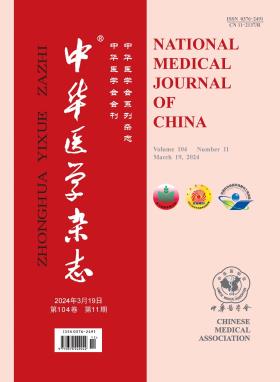
中华医学杂志
2024年 · 第104卷第11期
中华医学杂志
- 全部
- 专家论坛
- 标准与规范
- 人类白细胞抗原(HLA)与临床应用
- 临床研究
- 基础研究
- 短篇论著
- 综述
- 文献速览
The skin, an important component of the body's physical barrier and susceptible to injury and pathogens, is innervated by dorsal root ganglion (DRG) sensory neurons that receive mechanical, thermal, and chemical stimuli, which include harmful signals that cause itching or pain. Microorganisms that colonize the skin play a key role in tissue homeostasis and maintenance of physiological functions. Among them, Staphylococcus aureus is an opportunistic infection pathogen and the main cause of bacterial infection in humans. However, the role of pathogenic microorganisms in driving pruritus is unknown. In order to study the role of Staphylococcus aureus in pruritus, the research team used a mouse model of percutaneous exposure associated with specific dermatitis. In this model, the researchers topically inoculated S. aureus on depilated back skin and closed it with tape during bacterial exposure, causing rupture and inflammation of the epidermis at the inoculation site. Finally, it was found that after the skin of mice was exposed to S. aureus, the inflammation score increased significantly, the scratching behavior also increased significantly, and the skin damage even spread beyond the original exposed site. In addition, filament contact with this harmless stimulus usually does not cause itching, but the research team found that mice exposed to Staphylococcus aureus group caused itching under filament stimulation. This phenomenon of abnormally sensitive skin is called itch dissimilation.
The incidence of KRAS G12C gene mutation in patients with metastatic colorectal cancer is 3% to 4%, and it is associated with poor prognosis of patients. For patients whose initial treatment with fluorouracil-based chemotherapy with or without bevacizumab was ineffective, standard post-line treatment with trifluridine tepipirimidine tablets (Tas-102) or regorafenib had limited efficacy, with an objective response rate of only 1% to 2%, a median progression-free survival of ≤2 months, and at the expense of adverse drug reactions. Currently, no targeted therapy driven by positive selection biomarkers has been approved for the treatment of KRAS-mutated colorectal cancer patients. Sotoracib is a small molecule inhibitor targeting KRAS G12C mutant protein, which can selectively and irreversibly inhibit KRAS G12C protein to block downstream proliferation and survival signaling pathways. The team's early research showed that sotolasib monotherapy has limited efficacy in colorectal cancer, but its combination with panitumumab, an epidermal growth factor receptor (EGFR) inhibitor, may be an effective method. Therefore, the team designed the CodeBreaK 300 study.
Parkinson's disease (PD) and related dementia is one of the fastest-growing neurological diseases in the world, and one of its pathological mechanisms is the accumulation of alpha-synuclein in fragile neurons in the brain. Prolonged life span, genetic factors, and long-term exposure to the associated environment are suspected to be the main drivers of PD risk and progression. Plastic pollution from plastic production and waste deposition worldwide has become one of the most pressing environmental threats facing the world, leading to microplastic pollutants in water and food. Microplastics refer to the diameter<5 mm particles, including smaller nanoplastics (<1 μ m). Disposable polystyrene products, such as disposable takeaway tableware, can generate large amounts of polystyrene waste, resulting in widespread plastic pollution. These nanoplastic contaminants promote the formation and propagation of α-synuclein fibers through high-affinity interactions with two domains (amphipathic and non-amyloid component) in α-synuclein.
本期目次