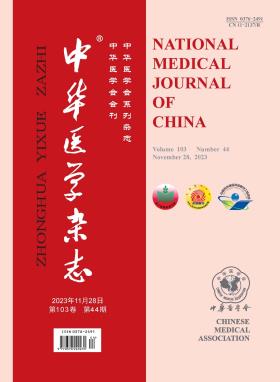
中华医学杂志
2023年 · 第103卷第44期
中华医学杂志
- 全部
- 述评
- 标准与规范
- 面神经肿瘤
- 临床研究
- 病例报告
- 综述
- 文献速览
The treatment strategies of facial schwannoma include surgery, radiotherapy and follow-up observation. There is no clear indication for these treatment methods at present, and there is no uniform conclusion on the treatment strategy of facial schwannoma. From the perspective of treatment modalities, the study retrospectively analyzed the relevant data of patients with facial nerve schwannoma from 1987 to 2018, including age, sex, clinical symptoms, tumor location, treatment strategy and treatment effect. A total of 22 patients underwent surgical treatment (including complete resection and subtotal resection), one underwent radiotherapy, and 22 were followed up without treatment. In patients who underwent total resection, no obvious signs of tumor recurrence were observed, and most patients complicated with grade 3 or 4 facial paralysis after surgery. Of the patients undergoing subtotal resection, facial nerve function remained unchanged in 4 patients compared with that before surgery, and facial nerve function deteriorated in 2 patients. Tumor recurrence was observed in 4 patients at postoperative follow-up, and 2 of them required reoperation. In the simple follow-up cases, 6 patients had enlarged tumor growth, 1 patient had aggravated facial paralysis, and 4 patients underwent facial nerve decompression due to facial paralysis. Therefore, surgical treatment is required when the tumor compresses the brain or grows faster. If the preoperative facial nerve function is ≤ grade 3, subtotal resection should be performed by considering preserving facial nerve function. When preoperative facial nerve function is ≥ grade 3, total tumor resection and nerve transplantation can be selected to prevent recurrence. If the tumor has no brain compression or tendency to grow rapidly, follow-up is a good choice, and decompression surgery should be considered for follow-up cases with facial paralysis.
High salt diet is closely related to the occurrence and development of common chronic diseases such as hypertension, stroke, heart disease, kidney disease and gastric cancer. In China, population salt intake mainly comes from salt added during home cooking, which is more than twice the adult limit recommended by the World Health Organization (WHO) (5 g/d); High salt intake is the third leading risk factor for death and disability, and the most important dietary risk factor. Salt reduction has been identified as one of the most cost-effective public health policies globally, but the effectiveness of salt reduction-related interventions has not been well-evaluated in randomized controlled trials (RCTs).
The standard treatment regimen for facial neuroma with normal or near normal facial nerve function [House-Brackmann (HB) grade I ~ II] is still controversial internationally. In order to achieve higher preservation of facial and hearing functions, therapeutic strategies and new therapies focusing on neurological preservation are being applied in the field of facial neuroma. This study is a retrospective study of low-fractionated stereotactic radiotherapy (hfSRS) in patients with facial nerve schwannoma (FNS). Four patients with intracranial FNS and one patient with extracranial FNS with preoperative facial nerve function of HBⅠ ~ Ⅱ from 2011 to 2019 were included in the study. The safety and efficacy of stereotactic radiotherapy were evaluated by a combination of tumor control, facial nerve function assessment (according to HB grading criteria) and auditory nerve function assessment (according to the recommendations of the American Academy of Otolaryngology and Head and Neck Surgery), and adverse radiation effects. The results showed that the median tumor volume of the patients in this study was 7.5 cm3(1.5~19.6 cm3), the median prescribed dose received was 23.2 Gy (21 to 25 Gy), and the median number of doses was 3 (3 to 5). The median follow-up was 31.4 months (13.0 to 71.0 months) for imaging and 32.6 months (15.1 to 72.0 months) for clinical symptoms. It was found that the local tumor control rate was 100.0%. At the last clinical follow-up, the facial nerve function of 4 patients (4/5) improved or remained unchanged in HB Ⅰ ~ Ⅱ, and the auditory nerve function of all patients improved or remained stable. Three (3/5) patients experienced transient clinical toxicity (facial nerve paralysis, earache, diplopia) and recovered within 6 weeks. None of the patients experienced adverse radiation reactions. Therefore, it is concluded that low-fractionation stereotactic radiotherapy appears to be safe and effective in the local tumor control of facial schwannoma and in the improvement of facial and auditory nerve function.
本期目次