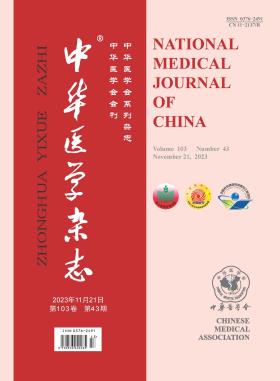
中华医学杂志
2023年 · 第103卷第43期
中华医学杂志
- 全部
- 专家论坛
- 标准与规范
- 临床研究
- 短篇论著
- 病例报告
- 综述
- 文献速览
Alzheimer's disease (AD) remains one of the major challenges facing human society, and its pathogenesis is still controversial. Existing human genetic evidence shows that microglia, an important immune cell in the brain, can protect other brain cells from invasion, and can remove metabolic garbage accumulated in the brain, thus delaying the degeneration of neurons. Its functional status is closely related to AD. Genome-wide association studies on sporadic late-onset AD found that myeloid cell trigger receptor 2 (Trem2) plays an important role in microglia detecting and processing neurodegeneration processes. Trem2 variation is the strongest genetic risk factor for AD. One of the factors, and activating Trem2 signaling pathway can activate the microglia response to A β and reduce A β deposition. Therefore, restoring or enhancing the defective Trem2 function in microglia may be a way to combat the damage and degeneration of AD neurons.
The prevalence of Alzheimer's disease (AD) is increasing year by year, but there is still a lack of effective treatment. Therefore, discovering and preventing controllable risk factors for AD has become one of the most important public health goals at present. Numerous evidence suggests that obesity is one of the risk factors for AD, and possible biological mechanisms for this correlation include increased levels of inflammation due to obesity, insulin resistance, and increased levels of beta-amyloid in adipose tissue. In addition, lower lean body mass (which refers to the remaining body mass except fat, a measure of muscle mass) is also associated with an increased risk of AD, but the causal or pre-post relationship between the two is not clear. The study hypothesized that "higher lean body mass can reduce the risk of AD and improve cognitive performance", and used Mendelian randomization to study the effect of lean body mass on AD risk and cognitive performance from a genetic perspective.
Most of the recent studies on relief pleasure focus on related learning behaviors, and indirectly reflect the positive emotional effects of relief pleasure through the anti-anxiety effects of behaviors, so it cannot directly confirm its own positive emotional effects. By drawing on the classical conditional position preference (CPP) behavioral model, the research team provided a quantifiable behavioral indicator for the positive emotional effect of relief pleasure-relief CPP. For the first time, this study provides a relatively complete chain of evidence for the physiological significance of relief pleasure: in correlation, the intensity of relief pleasure in individual animals is positively correlated with the toughness level of depression-like behaviors; In necessity and sufficiency, blocking or enhancing relief pleasure promotes or prevents chronic stress-induced depression-like behavior, respectively. This evidence confirms a causal relationship between relief pleasure and mental toughness, suggesting that relief pleasure may be a naturally selected natural antidepressant mechanism.
In 2009, a new subtype of acute T lymphocytic leukemia (T-ALL) was discovered, which has similar characteristics, unique gene expression profiles, and immunophenotypes to normal early T cell precursors (ETPs), and is called ETP-ALL. The immunophenotype of ETP lymphoblasts is defined as a loss of CD8 and CD1a expression, attenuated CD5 expression, and strong expression of one or more myeloid and/or stem cell markers, while "near ETP-ALL" is used to describe cases that otherwise meet the ETP-ALL immunophenotypic criteria, but express higher levels of CD5. Previous small-scale retrospective analyses have found that patients with ETP-ALL have a worse prognosis than non-ETP patients, therefore experimental therapy or hematopoietic stem cell transplantation after first remission is recommended. While minimal residual disease (MRD) levels are generally known to be high in patients with ETP, the prognosis of ETP-ALL remains unknown due to the lack of large-scale cohort studies.
本期目次