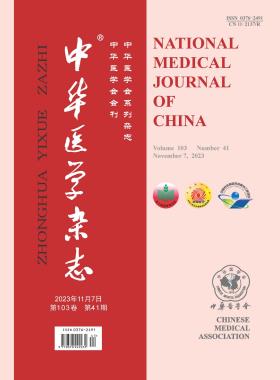
中华医学杂志
2023年 · 第103卷第41期
中华医学杂志
- 全部
- 述评
- 专家论坛
- 老年患者麻醉管理与加速术后康复
- 临床研究
- 病例报告
- 综述
- 文献速览
Repair after complete spinal cord injury (SCI) has always been an important topic in the field of nerve regeneration. Five years ago, the research team first discovered a method to promote axon regeneration in mice after SCI, but the motor function of mice failed to recover steadily. In order to solve this problem, the research team continued to explore and identify specific groups of neurons located in the middle thoracic spinal cord that regulate the recovery of motor function, and used chemistry to attract and guide the transverse axons of these neurons to their natural target areas, so that the walking ability of paralyzed mice after SCI was significantly recovered.
enhanced recovery after surgery (ERAS) can effectively improve postoperative outcomes, shorten hospital stay and reduce postoperative complications for surgical patients. Thoracic surgery may result in significant postoperative pain, so adequate postoperative analgesia is an important component of the ERAS protocol. Opioids are commonly used for analgesia after thoracic surgery, but may cause a range of adverse reactions. Minimally invasive techniques and the implementation of peripheral nerve blocks have helped reduce systemic opioid use, but few studies have investigated the effect of ERAS protocols on opioid use after thoracic surgery. The study evaluated postoperative opioid usage in patients undergoing lung surgery under the ERAS protocol and compared it to patients receiving conventional treatment. Patients who underwent lung surgery between August 2019 and December 2020 were included in the study. Patients in the ERAS group received an ERAS regimen focused on effective analgesia, and those who received conventional treatment regimens were classified into the traditional group. The primary study endpoint was total opioid use from surgery to discharge. Secondary endpoints included mean and highest pain scores during exercise, opioid-related adverse events, and clinical outcomes such as length of stay in the intensive care unit (ICU), length of stay, rate of readmission within 30 days, and Clavien-Dindo surgical complication grade.
Infliximab (IFX) can effectively induce and maintain remission of Crohn's disease (CD), but IFX failure to respond is an urgent clinical problem, which may be due to its immunogenicity leading to increased IFX clearance and decreased drug levels. Vitamin D, as an immunomodulatory substance, plays an important role in maintaining gut immune homeostasis. Studies have shown that CD patients are more likely to have vitamin D deficiency than normal people, and vitamin D deficiency may be related to an increased risk of hospitalization and increased use of steroids and biologics in CD patients. There are also studies that have found that vitamin D levels may affect the efficacy of IFX, but this view remains controversial. At present, there is no sufficient evidence on whether vitamin D supplementation can affect the efficacy of IFX in the treatment of CD. Therefore, the researchers conducted this retrospective study to explore: (1) whether vitamin D supplementation can increase the serum concentration of vitamins in patients with CD treated with IFX and improve the clinical response rate of patients at week 54; (2) the determinants of vitamin D supplementation to improve the efficacy of IFX; (3) Whether vitamin D supplementation affects the expression of Th cell-related cytokines in patients with CD treated with IFX.
本期目次