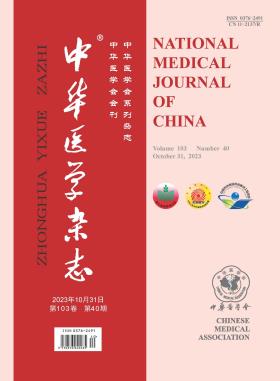
中华医学杂志
2023年 · 第103卷第40期
中华医学杂志
- 全部
- 述评
- 专家论坛
- 标准与规范
- 甲状腺肿瘤
- 基础研究
- 经验交流
- 病例报告
- 综述
- 文献速览
The external branch of the superior laryngeal nerve (EBSLN) is susceptible to damage during thyroidectomy, resulting in the inability to produce high tones after surgery, negatively affecting the patient's quality of life. Therefore, routine identification of EBSLN during surgery is essential to reduce complications of thyroidectomy. The purpose of this study was to verify the role of video-assisted surgery in the identification and protection of EBSLN during thyroidectomy, and to analyze the classification and localization of EBSLN in the positional relationship of the nerve penetration point (NEP) to the sternothyroid muscle. 134 patients with thyroid lobectomy were randomly divided into video-assisted surgery group and conventional open surgery group. The maximum diameter of thyroid mass was ≤4 cm and there was no extracapsular thyroid invasion. The researchers used video-assisted surgery to directly visually recognize EBSLN, and compared the differences in visual recognition rate and total recognition rate between the two groups. Meanwhile, the positioning of NEP was measured. The results showed that there was no statistically significant difference in baseline clinical characteristics between the two groups. Both the visual recognition rate and the total recognition rate in the video-assisted surgery group were significantly higher than those in the conventional open surgery group (91.04% vs. 77.61%, 100% vs. 89.6%). The EBSLN injury rate was 0 in both groups. The mean vertical distance (VD) of the NEP from the sternal thyroid insertion was 1.18 mm (standard deviation 1.12 mm, range 0 to 5 mm), with 88.97% of the results within this distance of 0 to 2 mm. The mean horizontal distance (HD) was 9.33 mm (standard deviation 5.03 mm, range 0 to 30 mm), and more than 92.13% of the results occurred within this range of 5 to 15 mm. Therefore, it is concluded that the visual recognition rate and total recognition rate of EBSLN in the video-assisted surgery group are higher than those in the conventional open surgery group. This method provides a good visual exposure rate of EBSLN, helping to identify and protect EBSLN during thyroidectomy.
本期目次