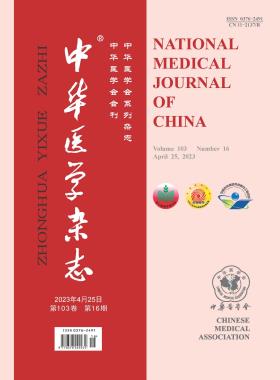
中华医学杂志
2023年 · 第103卷第16期
中华医学杂志
- 全部
- 专家论坛
- 医药卫生策略探讨
- 标准与规范
- 非小细胞肺癌
- 胆囊与胆管疾病
- 临床研究
- 短篇论著
- 病例报告
- 综述
- 文献速览
The American Cancer Society reports annually the latest population-based data on new cancer onset and deaths by estimating new cancer cases and deaths in the United States. Incidence data (as of 2018) were collected by the Surveillance, Epidemiology, and End Outcomes Project, the National Cancer Registry Program, and the North American Cancer Registry Association. Mortality data as of 2019 was collected by the National Center for Health Statistics. In 2022, 1,918,030 new cases of cancer and 609,360 cancer deaths are expected to occur in the United States, with about 350 patients dying daily from lung cancer, the leading cause of cancer deaths. Although the incidence of advanced disease has increased by 4% to 6% annually since 2011, the incidence of breast cancer in women has grown slowly (0.5% annually) from 2014 to 2018, and the incidence of prostate cancer has remained stable. As a result, the proportion of people diagnosed with advanced prostate cancer has risen from 3.9% to 8.2% in the last decade. In contrast, the incidence of advanced lung cancer continued to decline sharply, while the incidence of localized stage increased by 4.5%, increasing the proportion of localized stage diagnoses (from 17% in 2004 to 28% in 2018) and the 3-year relative survival rate (from 21% to 31%). Mortality patterns reflect trends in morbidity, with an accelerated decline in lung cancer mortality, a slower decline in breast cancer, and a stabilization in prostate cancer, with corresponding changes in medical practice related to cancer screening and/or treatment. More targeted cancer control interventions and increased investment in early detection and treatment will help reduce cancer mortality.
Acute kidney injury (AKI) in paediatric intensive care patients is diagnosed by elevated serum creatinine, which only occurs after kidney injury. Once AKI occurs, there is no treatment other than supportive care, so it is important to identify patients at risk to prevent kidney injury. The study established a machine learning model to learn pre-disease physiological measurement patterns and predict childhood AKI 48 h ahead of current diagnostic guidelines. Based on electronic medical record data from 16 863 pediatric intensive care patients aged 1 month to 21 years from 3 independent institutions, the study established a single machine learning model based on early prediction of serum creatinine that automatically assesses real-time AKI risk using intelligent engineered predictors such as creatinine rate of change. The primary outcome was moderate to severe AKI (stage 2/3) and the secondary outcome was any AKI (stage 1/2/3) and the need for renal replacement therapy (RRT). The risk of AKI can be quickly assessed and reduced based on the alerts generated by the forecast and related information and recommendations, such as predicting that "the patient has a 90% risk of developing AKI in the next 48 h" and prompting that "the patient is taking aminoglycosides, it is recommended to check the drug level and review the dosage and indications". The model successfully predicted stage 2/3 AKI prior to routine standard testing with a median lead time of 30 h and an area under the subject operating characteristic (ROC) curve of 0.89. The model established by the study predicted the occurrence of 70% of subsequent RRT, 58% of stage 2/3, and 41% of any stage AKI. The ratio of false to true alarms occurring in any AKI is approximately 1:1 (positive predictive value of 47%). Seventy-nine percent of patients identified by the model were treated with drugs with potential nephrotoxicity prior to developing AKI. As the first multicenter-validated predictive model for AKI in pediatric intensive care patients, this model can accurately predict moderate to severe AKI 48 h before AKI occurs. At the same time, the model can improve the prognosis of children with AKI by providing early warning and actionable feedback, and prevent or reduce the occurrence of AKI by implementing early measures such as medication adjustment.
本期目次