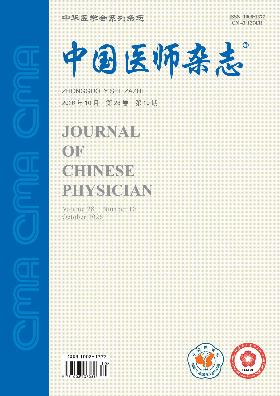
Journal of Chinese Physician

Journal of Chinese Physician is an academic medical journal supervised by the National Health Commission of the People's Republic of China and sponsored by the Chinese Medical Association and Hunan Medical Association. It is a Chinese Core Journal of Science and Technology, a source journal for Chinese scientific and technical papers statistics, a source journal for the Chinese Academic Journal Impact Factor Annual Report, and a series journal of the Chinese Medical Association. It features abundant information (comprehensiveness), fast publication cycle (monthly), strong forward-looking orientation, and prominent practicality and operability. Columns include Editorials, Thematic Research, Guidelines and Consensus, Expert Commentaries, Original Articles, Clinical Experience, Reviews, etc.
1 Submission Methods and Requirements
1. Journal of Chinese Physician does not accept hard-copy manuscripts. Submission shall be made via the Chinese Medical Association Journal Publishing Service Platform (https://medpress.yiigle.com) or the official website of Journal of Chinese Physician (http://www.zgyszz.com). After successful online submission, please pay the manuscript processing fee as prompted and mail the following materials: (1) Introduction Letter and Authorization Form: Download and fill in the Introduction Letter for Manuscript Submission to Journals of Chinese Medical Association Series and Paper Authorization Form for Journals of Chinese Medical Association Series on the homepage of the remote manuscript management system. These documents shall be reviewed and stamped by the academic authority of the author’s institution. (2) If the research is funded by a foundation project, a copy of the foundation project approval document shall be attached. If confidentiality is involved, a certificate of approval for publication issued by the relevant department shall be attached.
2. Manuscripts shall be innovative, scientific, guiding and practical. Submitted manuscripts shall have authentic materials, accurate data, distinct arguments, rigorous structure, concise text and highlighted key points. Statistical analysis shall be performed when necessary. Original articles and reviews generally shall not exceed 6,000 words (including abstracts, figures, tables and references); the word count of other types of manuscripts may be adjusted appropriately.
3. Medical Ethics and Informed Consent The basic principles of medical ethics must be followed. When human beings are the research subjects of the paper, authors shall state whether the adopted procedures comply with the ethical standards formulated by the ethics review committee (institutional, regional or national), and provide the approval document from the committee (the approval number shall be recorded in the paper) as well as the informed consent form from the research subjects or their relatives. If animals are used as research subjects, it shall be stated whether the relevant national and institutional regulations on the management and use of experimental animals are followed. If approved, the approval document and approval number issued by the experimental animal ethics review committee shall be submitted.
4. Conflicts of Interest Authors shall submit a conflict-of-interest disclosure statement at the time of submission, specifying all economic and non-economic competing interests. Authors are responsible for the authenticity of the submitted conflict-of-interest disclosure statement, and the corresponding author is responsible for signing the conflict-of-interest disclosure form. If all authors believe there are no actual or potential conflicts of interest, a statement "All authors declare no conflicts of interest" shall be placed at the end of the paper.
5. Author Contribution Statement Original research articles must provide an author contribution statement, specifying the specific work of each author in the study design, implementation and reporting. Examples: direct participation (conceiving and designing experiments, conducting research, collecting data, analyzing/interpreting data), manuscript writing (drafting the manuscript, critically reviewing the intellectual content of the manuscript), work support (statistical analysis, funding acquisition, administrative, technical or material support, supervision, supportive contributions), and others.
6. Foundation Projects If the paper involves a project supported by national, ministerial, provincial or higher-level funds or key research projects, it shall be noted. Foundation projects shall be marked in both Chinese and English below the Chinese and English keywords respectively.
2 Basic Manuscript Writing Requirements
1. Title Titles shall be concise, eye-catching and reflect the theme of the article. Chinese titles are preferably within 25 Chinese characters. Subtitles are better avoided; punctuation marks are generally not used, and abbreviations should be avoided as far as possible. The Chinese and English titles shall be consistent in meaning.
2. Authorship Author names shall be listed sequentially below the title. The order shall be jointly discussed and determined by all authors before submission and shall not be changed after submission. If modification is absolutely necessary, institutional certification and written proof with handwritten signatures of all authors confirming no dispute over authorship must be provided. The name of the author’s institution (specific to departments) and postal code shall be listed below the author names, and the Email address of the corresponding author shall be noted. An author must satisfy all four of the following criteria: (1) Participated in topic selection and design, or participated in data analysis and interpretation; (2) Drafted the paper or made critical revisions to important aspects of its academic content; (3) Conducted comprehensive review and final check of the final version to be published; (4) Agreed to take responsibility for all aspects of the paper, guarantee proper investigation into issues of accuracy and research integrity for any part of the research work, and resolve them in a timely manner. Persons who only participate in funding acquisition or data collection shall not be listed as authors, and persons who only perform general management of the research group shall not be listed as authors.
3. Abstract Original articles shall be accompanied by Chinese and English structured abstracts, including four subheadings: Objective, Methods, Results and Conclusions. Written in the third person, abstracts shall not contain figures, tables, citations, comments or interpretations. Both Chinese and English abstracts are about 400 words and shall correspond in content; the English abstract may be slightly more detailed.
4. Keywords Generally 3–8 keywords shall be tagged for each article. Terms should preferably be selected from the MeSH database of the United States National Library of Medicine, and their Chinese translations may refer to the Annotated Alphabetical List of Medical Subject Headings compiled by the Institute of Medical Information, Chinese Academy of Medical Sciences. New professional terms not included in the thesaurus (free terms) may be directly used as keywords and are recommended to be placed at the end. Keywords of traditional Chinese medicine shall be selected from the Traditional Chinese Medicine Subject Headings compiled by the Institute of Information on Traditional Chinese Medicine, China Academy of Chinese Medical Sciences. Articles with English abstracts shall be marked with English keywords corresponding to the Chinese ones.
5. Medical Terms Terms published by the China National Committee for Terms in Sciences and Technologies shall be used. For disciplinary terms not yet examined, subject terms in the latest editions of MeSH, Annotated Alphabetical List of Medical Subject Headings and Traditional Chinese Medicine Subject Headings may be adopted. If there is no universal translation, the original term shall be annotated at the first occurrence in the text. Names of Chinese and Western medicines shall comply with the latest edition of Pharmacopoeia of the People's Republic of China and Chinese Generic Drug Names (compiled by the Chinese Pharmacopoeia Commission). If a trade name must be used, its generic name shall be noted first. Standard names shall be adopted for Chinese herbal medicines; Latin names shall be annotated for herbs not included in the pharmacopoeia.
6. Character Usage Strictly implement the Law of the People's Republic of China on the Standard Spoken and Written Chinese Language (2000-10-31), the Notice on Further Regulating the Use of Characters in Publications issued by the National Press and Publication Administration on December 23, 2010, and the Provisions on the Administration of Chinese Character Usage in Publications issued by the National Press and Publication Administration and State Language Commission in 1992. The List of General Standard Chinese Characters issued by the Ministry of Education and State Language Commission on June 2013 shall be followed.
7. Statistical Methods (1) Statistical symbols: Statistical symbols shall be italicized in accordance with GB/T 3358.1-2009 Statistics — Vocabulary and symbols. (2) Presentation and description of data: Use x̄±s for quantitative data approximately following normal distribution; use M (Q1,Q3) or M (IQR) for skewed quantitative data. When using statistical tables, arrange row and column headings reasonably and clarify the meaning of data. When using statistical charts, the chart type shall match the data properties, and the scale marking on axes shall conform to mathematical principles. For relative numbers, the denominator should preferably not be less than 20; distinguish between rate and percentage. (3) Selection of statistical analysis methods: For quantitative data, select appropriate statistical analysis methods according to study design, data conditions and research objectives. For qualitative data, select appropriate statistical analysis methods according to study design, properties of qualitative variables, frequency conditions and research objectives. For regression analysis, select appropriate regression types combined with professional knowledge and scatter plots. Repeated experimental data for regression testing shall not be simplified. For multi-factor and multi-indicator data, multivariate statistical methods should be applied on the basis of univariate analysis to comprehensively and reasonably interpret and evaluate the interactions between factors and internal associations among multiple indicators. (4) Interpretation and presentation of statistical results: When P<0.05 (or P<0.01), it shall be described as the difference between comparison groups is statistically significant, rather than "significant (or highly significant) difference". The specific name of statistical method, statistic value and exact P value shall be stated (e.g. t=3.45, χ2=4.68, F=6.79). When P equals 0.000, write P<0.001 instead of P=0.000. When estimating population parameters (such as population mean, population rate, RR, OR, HR, etc.), 95% confidence intervals shall be provided together with significance test results (statistic and P value).
8. Figures and Tables Figures and tables of the original manuscript shall be attached collectively at the end of the text and numbered consecutively in the order of their appearance in the main text. Each figure or table shall have a title. Explanatory text shall be placed in the notes below the figure/table, and all non-public abbreviations used in the figures and tables shall be annotated in the notes. Three-line tables (top line, table header line, bottom line) are recommended. If there are totals or statistical results (e.g. t value, P value), an additional dividing line shall be added above that row. The number of significant digits for the same indicator in tables shall be consistent, generally determined by 1/3 of the standard deviation. Photographs shall have good clarity and contrast. If human portraits are published, written consent of the individual shall be obtained, or identifiable facial features shall be masked. Gross specimen photographs shall have scale bars within the image. Histological (pathological) photographs shall indicate staining method and magnification factor. If figures or tables are quoted from other journals, the source shall be indicated.
9. Units of Measurement Follow the provisions of GB 3100/3101/3102-1993 Quantities and Units. For specific usage, refer to the 3rd edition of Application of Legal Units of Measurement in Medicine edited by Chinese Medical Association Press (People’s Military Medical Press, 2001).
10. Usage of Numerals Follow GB/T 15835-2011 Rules for Writing Numerals in Publications.
11. Reference Format Follow GB/T 7714-2015 Information and Documentation — Rules for Bibliographic References. References shall be prepared in sequential coding system. Arabic numerals in square brackets shall be used in the order of first citation in the text and listed at the end of the paper. Internal journals, unpublished materials (excluding accepted manuscripts awaiting publication), personal communications shall not be cited as references; if citation is necessary, notes may be added in the corresponding part of the main text. Japanese Kanji shall be written in accordance with Japanese rules and not confused with Chinese characters and simplified Chinese characters. List all authors for 1–3 authors; for more than three authors, list the first three followed by ", et al." in the corresponding language. Author names shall be written with surname first and given name last. For foreign authors, given names shall be abbreviated without periods after abbreviations. Author names are separated by commas, without conjunctions such as "and". Document type markers shall be noted after the title. Codes for document types and electronic document carriers refer to Appendix B of GB/T 7714-2015 Codes for Document Types and Document Carriers. Chinese journal names shall be written in full; foreign journal names shall be abbreviated in accordance with the format in Index Medicus published by the United States National Library of Medicine. For journals not indexed by Index Medicus, use the journal’s own abbreviation or full title sequentially. The DOI number of the reference shall be recorded at the end of each entry.
3 Writing Requirements for Different Types of Articles
1. Editorials Editorials are highly guiding articles in the professional field, generally invited by the editorial board from well-known experts in the field. They shall summarize and evaluate the current research status and future development directions of a certain field, and their viewpoints shall reflect the mainstream trends of academia. When writing, authors may focus on a specific issue in a field, combine existing research results, introduce personal experience, state opinions and provide supporting evidence.
2. Guidelines and Expert Consensus Guidelines and expert consensus are important tools for evidence-based decision-making and practice. Their development shall be based on evidence from systematic reviews or Meta-analyses, and the quality of evidence and strength of recommendations shall be graded. Prospective registration shall be completed before development (International Practice Guideline Registry Platform http://www.guidelines-registry.org). After development, they shall be written and reported in standardized format (RIGHT checklist). In addition, conflicts of interest of all participants shall be fully declared and managed throughout the whole development process.
3. Original Articles Original articles may be structured as Introduction, Materials (Subjects) and Methods, Results, and Discussion.
The introduction shall briefly state the background of research design, adopted research methods and intended objectives, with cited references, preferably 200–300 words. The type of research shall be clearly specified in the methods section, and key information of the research type shall also be reflected in the abstract or title. Specific contents include: (1) clinical research or experimental research; (2) prospective or retrospective research; (3) case series, case-control study, cohort study, non-randomized controlled trial or randomized controlled trial. Results shall correspond to methods one-to-one, and comments shall be avoided. All results discussed in the discussion section must be presented in the results section. Prospective clinical trials may be written following the CONSORT reporting guidelines.
4. Reviews Reviews objectively summarize and state the current research status of a certain topic in a field, combined with authors’ research results and viewpoints. Topics with rapid research progress shall be selected instead of slowly developing topics. Literature within the past 5 years shall be preferred for reviews. Third-person narration is adopted; direct expression of personal opinions shall be avoided.
5. Descriptive Articles (Case Reports, etc.) Case reports shall select cases with special diagnosis and treatment processes that can inspire clinical management of similar cases; simple accumulation of rare cases shall be avoided. Case data shall be complete, including chief complaint, present illness, past history, physical examination, laboratory tests, imaging examinations, diagnosis, treatment, pathological examination, prognosis, etc. Examination results of great significance for diagnosis and treatment shall be highlighted. Innovative therapeutic methods shall also be described in detail. The discussion section shall briefly comment on the characteristics of diagnosis and treatment of the case, rather than conducting a literature review.
4 Manuscript Processing
1. Peer Review System Journals of Chinese Medical Association adopt a three-stage peer review system based on peer review (preliminary editorial review, external expert review, final review by editorial board). The confidentiality of authors’ manuscripts is protected during the review process. Authors will be notified of rejection reasons for unpublished manuscripts. If authors disagree with the manuscript decision, they have the right to apply for reconsideration and submit written appeal statements.
2. Time Limit for Manuscript Processing In accordance with the Copyright Law of the People's Republic of China and the actual situation of this journal, if no manuscript decision notice is received within 3 months after receiving the journal’s acknowledgment, the manuscript is still under review. If authors intend to submit the manuscript to another journal, they must contact the editorial department in advance; otherwise, it will be treated as duplicate submission, rejected, and the author will be included in the academic misconduct management list. Manuscripts previously published in non-public journals, presented at academic conferences, or published in other languages (with permission from the first publishing journal) are not regarded as duplicate submission, but authors must state this upon submission.
3. Authors are responsible for the authenticity and scientific validity of submitted manuscripts. In accordance with the Copyright Law of the People's Republic of China, this journal may revise or abridge manuscripts. Revisions changing the original meaning will be submitted to authors for consideration. If the revised manuscript is not returned within 2 months, it will be regarded as automatic withdrawal.
4. Retraction The editorial board reserves the right to retract papers after publication for the following problems: (1) serious unreliability, academic misconduct (including fabrication and falsification of data), or unintentional errors rendering the findings and results reported in the paper unreliable; (2) plagiarism; (3) violation of medical ethics by the research reported in the paper; (4) duplicate publication; (5) serious defects in the manuscript publication process. Once verified, the editorial board will handle it in accordance with the Recommended Specifications for Retraction of Papers after Publication of Journals of Chinese Medical Association Series.
5 Paper Authorization and Relevant Fees
Once the manuscript is accepted for publication and all authors sign the Paper Authorization Form for Journals of Chinese Medical Association Series, the exclusive right of use of the paper belongs to the Chinese Medical Association. The Chinese Medical Association has the right to publish the accepted paper in electronic journals, CD-ROM editions, APP terminals, WeChat and other forms. No part of the paper may be reproduced elsewhere without permission of the Chinese Medical Association.
A review fee of 100 RMB shall be paid for each manuscript. After confirmation of acceptance for publication, relevant publication fees shall be paid according to the notice. Additional fees for color printing are charged for color figures. Two copies of the current issue will be presented complimentary after publication.
6 Contact Information
Editorial Department of Journal of Chinese Physician, Address: No.30 Xiangya Road, Kaifu District, Changsha City, Hunan Province, Postal Code: 410008, Tel: 0731-84470811; Email:jcp@cmaph.org.
CURRENT ISSUE