

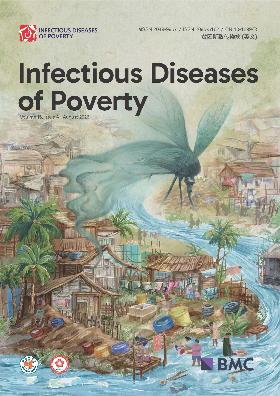
Infectious Diseases of Poverty
Volume 15 · Issue 04 · 2026
Published: August 10, 2026
Infec Dis Poverty
Review
Open Access
Broadly neutralizing antibodies for HIV therapy in clinical trials: a systematic reviewJinfang Zhao, Hui Wu, Jiayi He, Yinsong Luo, Jiaye Liu
Infectious Diseases of PovertyVol.15,No.042026
DOI: 10.1186/s40249-026-01471-4
Abstract
Background
Lifelong daily antiretroviral therapy (ART) effectively suppresses human immunodeficiency virus type 1 (HIV-1) replication but does not eradicate the virus, underscoring the urgent need for long-acting antivirals and functional cure strategies. Broadly neutralizing antibodies (bNAbs) have emerged as a promising approach for achieving durable HIV-1 remission. In this systematic review, we summarize recent advances in the development of bNAbs for HIV-1 treatment.
Methods
We searched PubMed, Embase, and Web of Science for clinical trials published up to March 22, 2026. We included data evaluating intravenously administered bNAbs, with or without concomitant conventional ART, and comparing them with placebo, ART or no intervention. These data were used to evaluate the pharmacokinetics, antiviral efficacy, resistance profiles, immunologic effects, and safety of intravenously administered bNAbs.
Results
LS-modified bNAbs extended half-life by 2- to 5-fold relative to their parental counterparts (e.g., VRC01LS: 71 vs 15 days), although viremia reduced half-life by 20-40%. In viremic participants harboring bNAb-sensitive virus, monotherapy achieved viral load (VL) reductions of 0.93-1.8 log10 copies/ml, with rebound occurring within approximately 4-8 weeks, whereas combinations regimens achieved declines of up to 2.04 log10 copies/ml and delayed rebound to 15-33 weeks. No consistent reduction in total reservoir size was observed, although early intervention and baseline viral sensitivity appeared to limit reservoir expansion. Resistance emerged through epitope-proximal mutations, with cross-resistance observed mainly among antibodies targeting shared epitope classes. Overall, bNAbs were well tolerated, with rare discontinuations (0.4%) and low immunogenicity.
Conclusions
LS-engineered bNAbs exhibit a longer half-life than their parental antibodies. Combination regimens achieve greater VL reductions and a longer delayed rebound compared with monotherapy, indicating that LS-modified multi-epitope bNAb cocktails are promising for long-acting HIV-1 remission. To become clinically competitive, larger resistance-guided trials are needed to extend dosing intervals, improve resistance mitigation, and define optimal integration with other long-acting therapies.
Research
Open Access
Impact of climate warming on Oncomelania hupensis in China: multi-scale evidenceQin Li, Jin-Xin Zheng, Li-Juan Zhang, Su-ying Guo, Ying Yang, Jürg Utzinger, Xiao-Nong Zhou, Jing Xu, Shi-Zhu Li
Infectious Diseases of PovertyVol.15,No.042026
DOI: 10.1186/s40249-026-01475-0
Abstract
Background
Climate warming is increasingly reshaping the population dynamics of Oncomelania hupensis, the sole intermediate host of Schistosoma japonicum in China. Investigating the response of O. hupensis to climate warming is crucial for guiding targeted and precise interventions against these snails, thereby advancing the progress towards schistosomiasis elimination and sustaining the achievement of elimination in China. This study aims to quantify the multi-scale responses of O. hupensis to climate warming.
Methods
We conducted a 45-day temperature-controlled laboratory experiment with adult O. hupensis from Hubei Gongan County, China, exposing snails to the Low Temp group (5 °C), the Control group (25 °C), and the High Temp group (30 °C) to assess body-size-dependent survival. We then analyzed O. hupensis surveillance data from 1990 to 2022 across 12 provinces in China (34,554 villages), linked to climate data downloaded from ERA5-Land. We developed sliding-window models to examine climate exposure across life stages to assess population-level responses to climate warming, and used general linear mixed-effects models to explore the environmental factors influencing climate responses (geographic variables: latitude, longitude, altitude, land use, historical climate variability). Model performance was evaluated to identify the best predictive models, which were subsequently used to project future O. hupensis density under the SSP1-2.6, SSP2-4.5, and SSP5-8.5 scenarios. We further sampled 240 wild O. hupensis and measured their body sizes to validate the previous results inversely.
Results
At the individual level, we observed that larger snails had a higher survival rate at both the Low Temp group (91.6%, 95% CI: 85.8-97.7%) and High Temp group (45.7%, 95% CI: 31.9-65.6%) compared with the control group (76.5%, 95% CI: 58.7-99.5%). At the population level, O. hupensis density closely tracks climate warming, with 92.0% of populations showing positive temperature sensitivity. Exposure during the coldest (January: 2.7 × 10⁻², 95% CI: 3 × 10⁻³-5.1 × 10⁻²; February: 3.3 × 10⁻², 95% CI: 1.1 × 10⁻²-5.6 × 10⁻²) and breeding seasons (April: 2.4 × 10⁻², 95% CI: 6 × 10⁻³-4.3 × 10⁻²; September-October: 3.5 × 10⁻², 95% CI: 2 × 10⁻³-6.8 × 10⁻²) had a greater influence on O. hupensis density under climate warming. O. hupensis in waterbody-dominated areas showed the largest density growth rates (ß = 1.6 × 10⁻¹, 95% CI: 1.1 × 10⁻¹-2.2 × 10⁻¹), whereas crop populations were the most sensitive to land cover, a 1% increase in crop cover was associated with a 0.2 increase in population density. At the ecosystem level, only 19.0-24.6% of populations were expected to benefit from climate change by 2100, and these benefiting populations were concentrated in regions where sampled wild snails had a mean body size of 8.2 mm. Cropland will account for 72.0% of populations benefiting from climate warming, compared with 17.2% in forests and 8.3% in impervious-dominated areas.
Conclusions
The O. hupensis populations grow under climate warming but are regulated by land-use types. To mitigate the impacts of climate warming and land-use on snails, surveillance and integrated interventions should be strengthened through multi-sector collaboration.
Open Access
Prevalence, determinants, and wealth-related inequalities in malaria among under five children in Uganda: evidence from the malaria indicator surveyEdson Mwebesa, Delight Mawufemor Agbi, Isaac Isiko, Gideon Ikemdinachi Nwankwo, Rejoice Uche Obiora, Bisola Folusho Olubiyi, Charles Natuhamya
Infectious Diseases of PovertyVol.15,No.042026
DOI: 10.1186/s40249-026-01479-w
Abstract
Background
Malaria remains a leading cause of morbidity and mortality among children under five in Uganda. Despite national control efforts, significant disparities and inequalities in prevalence persist across regions, residences, and mean socio-economic status. This study examines the socio-demographic factors and wealth-related inequalities associated with malaria among children under five in Uganda.
Methods
A secondary analysis of data from the Uganda Malaria Indicator Survey (UMIS) 2018–2019 was conducted. A sample of 4600 children with malaria test results was included in the study. The distribution of malaria prevalence across socio-demographic factors was analysed using cross-tabulations and a chi-squared test. Malariarelated inequalities were measured using equity plots and the concentration index (CIX). A multilevel logistic regression model was used to examine the relationship between malaria prevalence and associated factors. The results are presented as adjusted odds ratios (aORs) with 95% confidence intervals (CI).
Results
Almost twenty-three in every 100 children under five had malaria infection (95% CI: 19.2-27.0). Regional variations in malaria prevalence and wealth-related inequalities were observed. The multilevel model identified several significant independent factors: older child age (aOR = 2.12, 9 5% CI: 1.51-2.96, P < 0.001), child ’s anemia (aOR =3.16, 95% CI: 2.33-4.29, P < 0.001), and larger household size (aOR = 1.98, 95% CI: 1.13-3.45, P < 0.05) were positively associated with malaria in children under five years in Uganda. A negative concentration index (CIX = - 0.334, P < 0.001) was also observed, indicating that higher malaria prevalence is concentrated among children in the poorest wealth quintile.
Conclusion
Malaria prevalence in Uganda is associated with a complex interplay of socioeconomic and geographic factors. The substantial disparities observed highlight the need for tailored public health strategies designed for high-burden regions and vulnerable communities to reduce disease burden effectively.
Open Access
Strengthening India’s pandemic preparedness with the four zonal institutes of virology: stakeholder consultations for outbreak response and collaborative research prioritiesKunal Pise, Babasaheb Tandale, Naveen Kumar, Pradip Barde, Ashok Munivenkatappa, Basavaraj Mathapati, Abhijeet Jadhav, Pankaj Rawat, Shrinivasa Basavaraj, Satish Gaikwad, et al.
Infectious Diseases of PovertyVol.15,No.042026
DOI: 10.1186/s40249-026-01484-z
Abstract
Background
The Pradhan Mantri Ayushman Bharat Health Infrastructure Mission (PM-ABHIM) scheme, supported by the World Bank, is establishing four zonal National Institutes of Virology (NIVs) in India. It is essential to identify the zonal disease and research priorities so as to focus research at zonal levels. This study reports a zonal viral disease prioritisation exercise to support outbreak response and collaborative research. It describes zonal-prioritised viral diseases, assesses concordance and differences in zonal priority lists and, and identifies cross-cutting research themes and preparedness gaps using an multicriteria decision analysis (MCDA)-based consensus process.
Methods
We conducted a cross-sectional, multi-stakeholder consultative study across four geographical zones of India in March 2024. The zonal-level consultative workshops employed a systematic consensus-building approach using the modified One Health Zoonotic Disease Prioritisation (OHZDP) tool, adapted for emerging viral diseases and applied via MCDA. We identified zonal-level stakeholders, listed 40 viral diseases and categorised them into three groups: common occurrence (Group A), limited occurrence (Group B), and rare occurrences with a chance of emergence, evolution or importation (Group C). The stakeholders from state health departments, medical colleges, research institutes and the Virus Research and Diagnostic Laboratory (VRDL) network ranked the viral diseases and research themes in each zone. Spearman rank correlation was used to assess concordance of priority rankings between zones.
Results
A total of 186 participants (42-48 per zone) contributed to the four zonal workshops including collaborators from VRDL laboratories (26%), public health stakeholders from Integrated Disease Surveillance programme(IDSP) (28%), invited experts (21%), organisers (19%) and Indian Council of Medical Research (ICMR) representatives (6%). The key outcomes included the zone-specific lists of priority viral diseases in Groups A, B and C. There were zonal variations in viral disease prioritisation, reflecting local epidemiological patterns. Spearman rank correlation analysis showed moderate positive correlation between the Central and East zones (rho= 0.697, P = 0.031), whereas other pairwise comparisons were not statistically significant, which indicated both shared and distinct priority patterns within the zones. The top five priority viral diseases across zones included dengue, influenza, measles, Japanese encephalitis and hepatitis A. The research themes and subthemes were then decided for collaborative research.
Conclusions
These multistakeholder consultations provided a novel, replicable template for prioritising viral diseases to develop strategies for mitigating the impact of future outbreaks through collaborative research. These zonal priorities may guide similar exercises at national, regional and global levels in future.
Open Access
Development and validation of a machine learning-based model for identifying liver fibrosis in individuals with prior Schistosoma japonicum infection: a step toward precision managementTao Wang, Yi Jiang, JianFeng Zhang, WeiMin Li, HuiXin Xue, HaiYong Hua, Wei Wang, Kun Yang
Infectious Diseases of PovertyVol.15,No.042026
DOI: 10.1186/s40249-026-01485-y
Abstract
Background
Liver fibrosis caused by Schistosoma japonicum may continue to progress even following successful praziquantel chemotherapy. Although liver biopsy remains the gold standard for diagnosis of liver fibrosis, its invasiveness limits clinical applications. Conventional non-invasive indices, such as aspartate aminotransferase to platelet ratio index (APRI) and fibrosis-4 (FIB-4) index, often show suboptimal performance in schistosomiasis-related cases. This study aimed to develop and validate a machine learning (ML)-based model using epidemiological and laboratory data to identify liver fibrosis in individuals with prior S. japonicum infection, as a step toward precision management.
Methods
Data were obtained from the Jiangsu S. japonicum Infection Cohort (Jiangsu Province, China), involving 6158 participants with a documented history of infection who completed follow-up assessments during 2021-2022. Modeling variables were selected using LASSO regression and variance inflation factor analysis. Five ML models (k-nearest neighbor, logistic regression, support vector machine, decision tree, and extreme gradient boosting (XGBoost)) were evaluated. Model performance was compared against APRI and FIB-4 using the area under the receiver operating characteristic curve (AUC), decision curve analysis (DCA), and shapley additive explanations (SHAP) for interpretability.
Results
In the validation set, the XGBoost model demonstrated the highest diagnostic performance with an AUC of 0.854 (95% confidence interval (CI): 0.826-0.881), outperforming other ML models (AUC range: 0.609-0.776). This was significantly superior to FIB-4 (AUC= 0.514) and APRI (AUC= 0.516) (P < 0.001). DCA confirmed that the XGBoost model provided a substantial clinical net benefit across a broad range of threshold probabilities. According to Shapley additive explanations analysis, variables such as alcohol intake (mean SHAP value= 0.401), gamma-glutamyl transferase (0.295), and triglycerides (0.292) were the most influential predictors of liver fibrosis risk.
Conclusions
The XGBoost-based model offers a robust, non-invasive tool for identifying liver fibrosis in individuals with prior S. japonicum infection, with alcohol intake, gamma-glutamyl transferase, and triglycerides identified as the critical predictors. By outperforming traditional indices and leveraging routinely available data, this model represents a promising advancement toward precision management of individuals with prior S. japonicum infection, offering a scalable approach for early intervention, risk-stratified assessment, and monitoring of hepatic morbidity in post-transmission settings.
Case Study
Open Access
Impact of COVID-19 on neglected tropical diseases in Zambia: a qualitative study of stakeholder perspectivesCaitlin Brigid Butala, Jenna Fyfe, Noreen Machila, Susan Christina Welburn
Infectious Diseases of PovertyVol.15,No.042026
DOI: 10.1186/s40249-026-01491-0
Abstract
Background
Neglected tropical diseases (NTDs) remain a major public health challenge in Zambia and other low- and middle-income countries, and there is concern that the COVID-19 pandemic has further disrupted progress towards control and elimination targets. This study explored how COVID-19 affected NTD programmes, funding, and partnerships in Zambia from the perspective of national-level stakeholders.
Methods
We conducted a qualitative case study using semi-structured interviews with key informants involved in NTD policy, programming, or surveillance in Zambia. Fourteen participants were purposively sampled from government ministries, the Zambia National Public Health Institute, international organisations, and academia. Interviews were conducted in person, audio-recorded, transcribed verbatim, and anonymised. Data were analysed using inductive thematic analysis, with codes developed from the transcripts and iteratively grouped into themes through constant comparison.
Results
Five overarching themes were identified: (1) public health infrastructure; (2) disease prioritisation and surveillance; (3) resource allocation and funding challenges; (4) collaboration and partnerships; and (5) direct impacts of COVID-19 on NTD activities. Participants reported that COVID-19 exposed and intensified pre-existing weaknesses in health system capacity, routine NTD surveillance, and financing, contributing to delays and reduced coverage of mass drug administration (MDA) and other interventions. Donor funding reallocation and the withdrawal or scaling back of some international partners created further uncertainty for NTD programmes, although various national institutions and the World Health Organization (WHO) helped sustain essential activities. At the same time, the pandemic period coincided with the strengthening of the Zambia National Public Health Institute and the development of updated NTD and One Health strategic plans. Stakeholders viewed these institutional changes as opportunities to build a more resilient NTD response.
Conclusions
COVID-19 disrupted NTD programmes in Zambia primarily by amplifying long-standing structural vulnerabilities in funding, surveillance, and service delivery, rather than through complete programme collapse. Strengthening routine NTD data systems, securing more predictable domestic financing, operationalising One Health and NTD master plans, and building more resilient, locally owned partnerships will be essential to recover lost ground and protect NTD control efforts from future shocks.
CURRENT ISSUE
Download Cover(PDF) Download TOC(PDF)
