

NEWS

MedPaper® Knowledge Service Platform of the Chinese Medical Journal Publishing House Officially Launched
The Chinese Medical Association Journals Publishing House Knowledge Service Platform, MedPaper®, has demonstrated stable performance and a well-established feature set, meeting the requirements for official launch. The platform is now formally open to researchers, clinicians, and all healthcare professionals across China.
MedNexus 2026/07/01
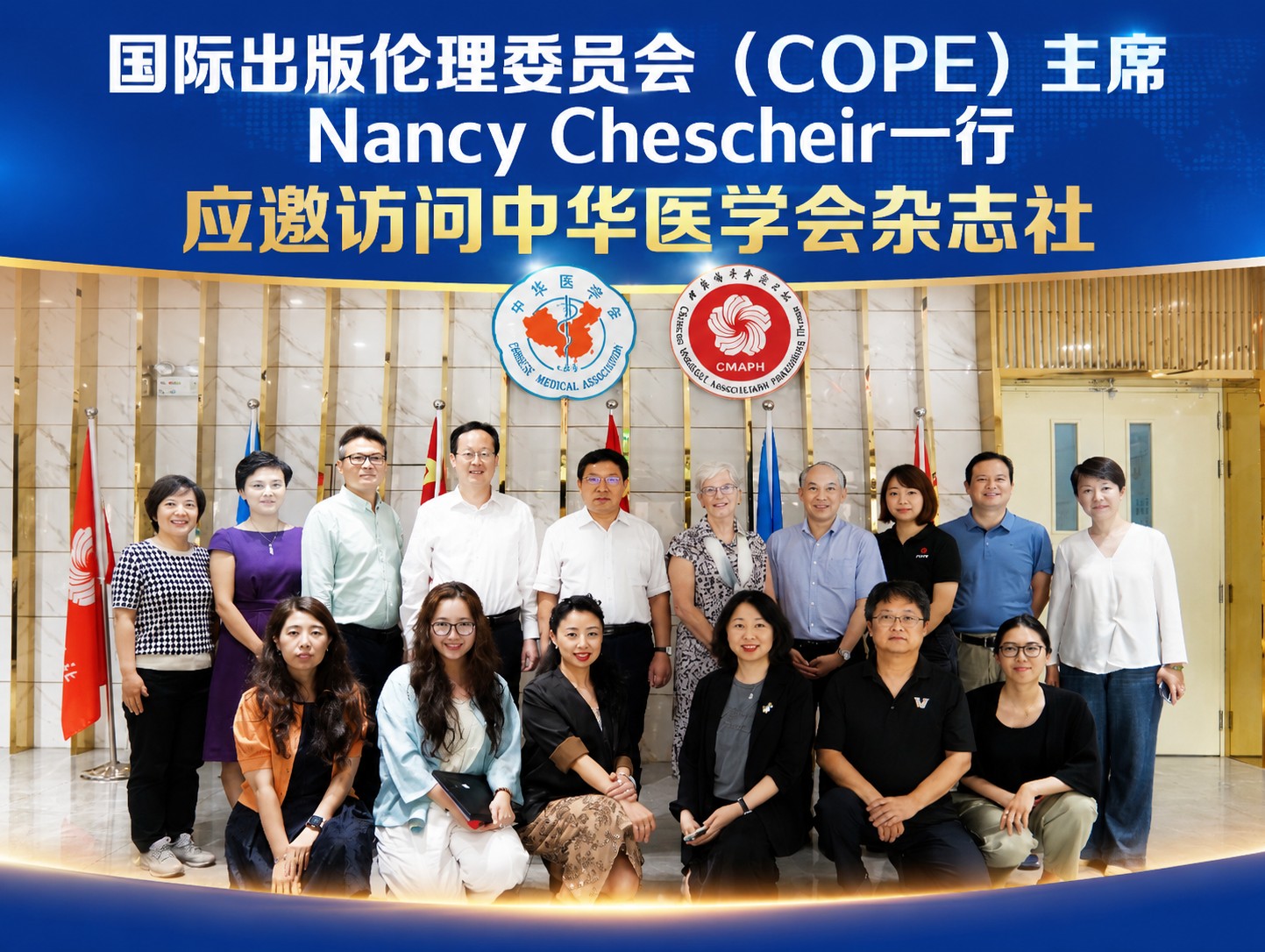
Nancy Chescheir, President of the Committee on Publication Ethics (COPE), and her delegation were invited to visit the Journal of the Chinese Medical Association
On June 18, Nancy Chescheir, Chair of the Committee on Publication Ethics (COPE), led a delegation on a visit to the Chinese Medical Association Publishing House. The two sides held in-depth discussions on publication ethics, collaboration among medical journals, digital publishing transformation, and opportunities for future international cooperation.
Chinese Medical Association Publishing House 2026/08/31
MedPaper® Knowledge Service Platform of the Chinese Medical Journal Publishing House Officially Launched
The Chinese Medical Association Journals Publishing House Knowledge Service Platform, MedPaper®, has demonstrated stable performance and a well-established feature set, meeting the requirements for official launch. The platform is now formally open to researchers, clinicians, and all healthcare professionals across China.
MedNexus 2026/07/01
Total: 3
GoToPage
TRENDING NEWS
 No Data